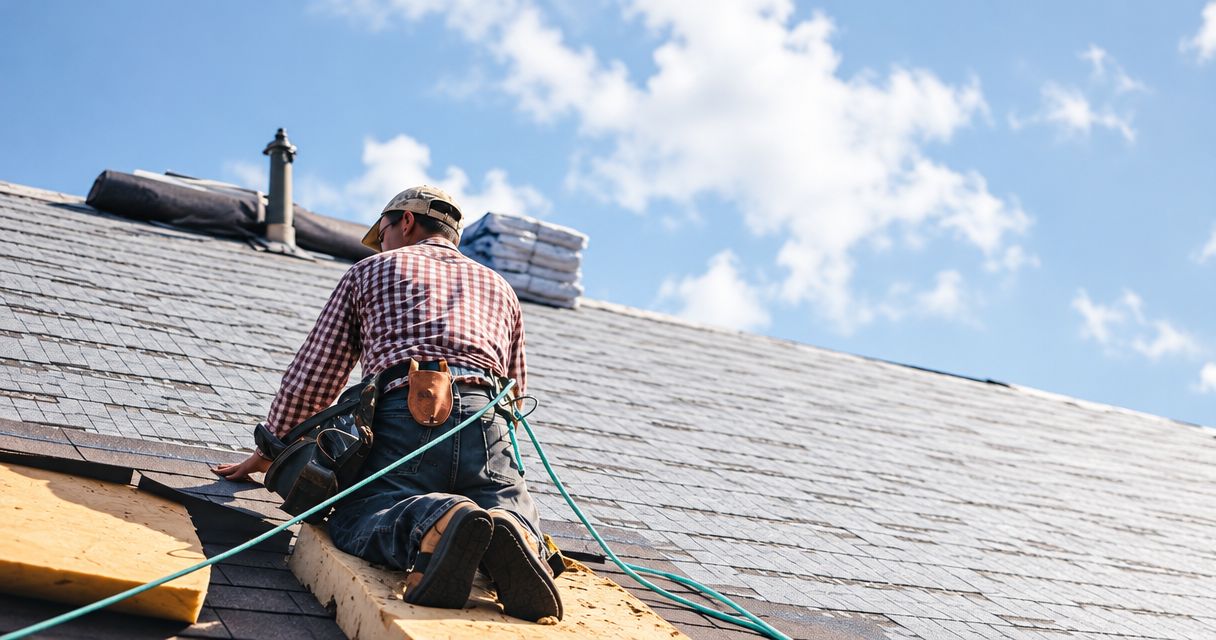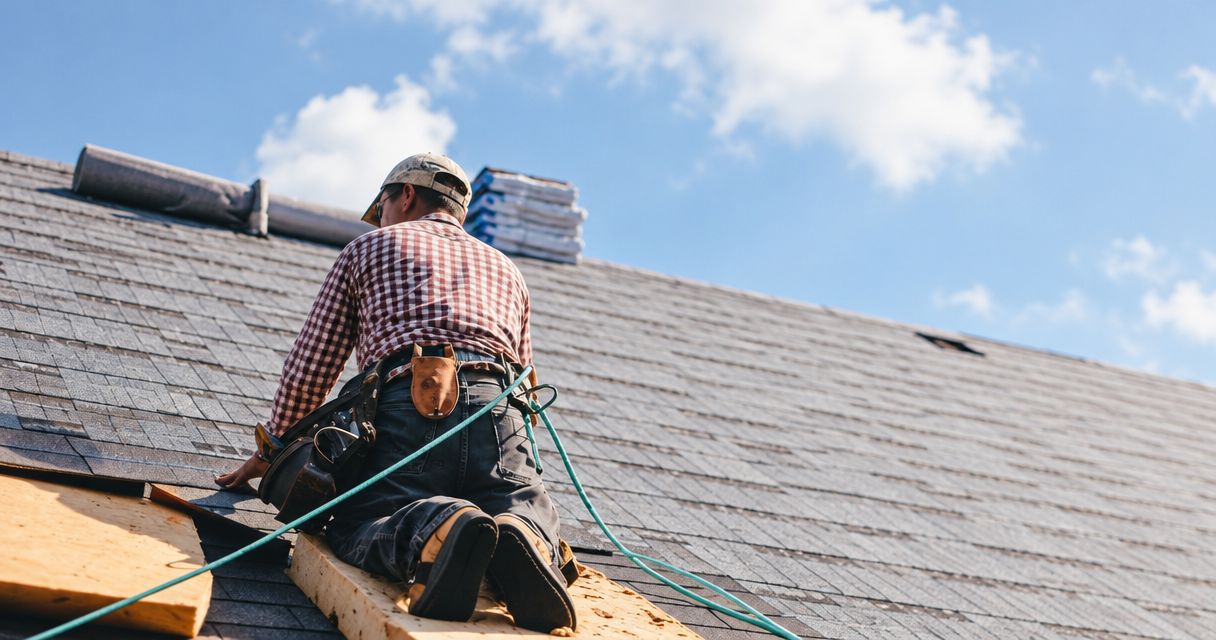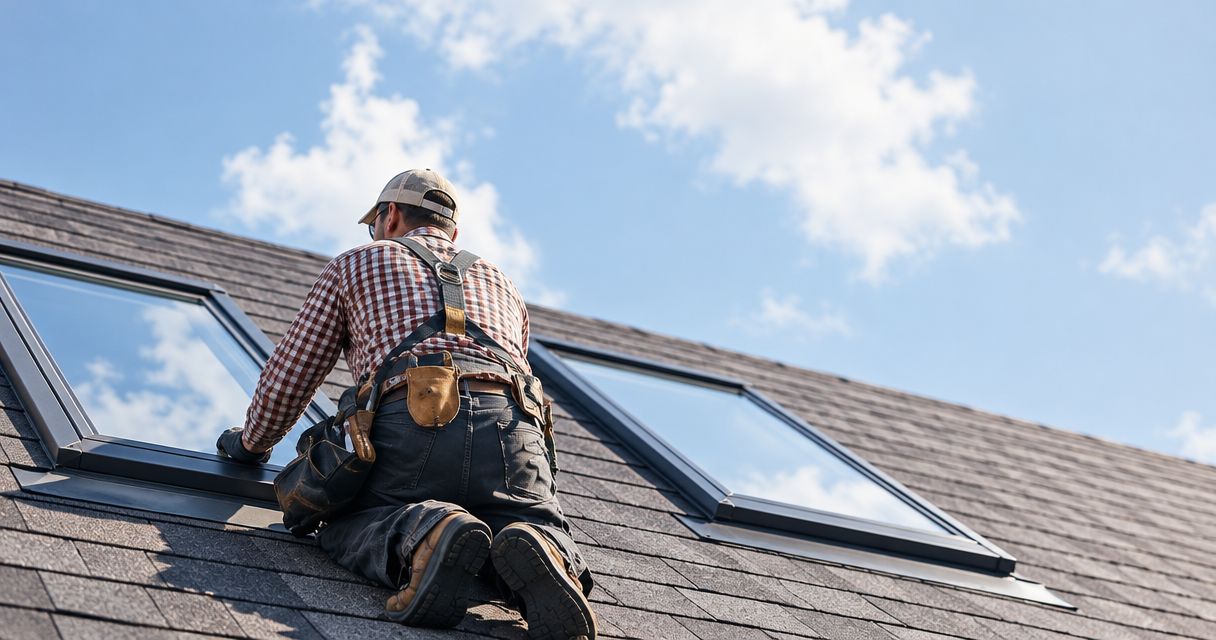
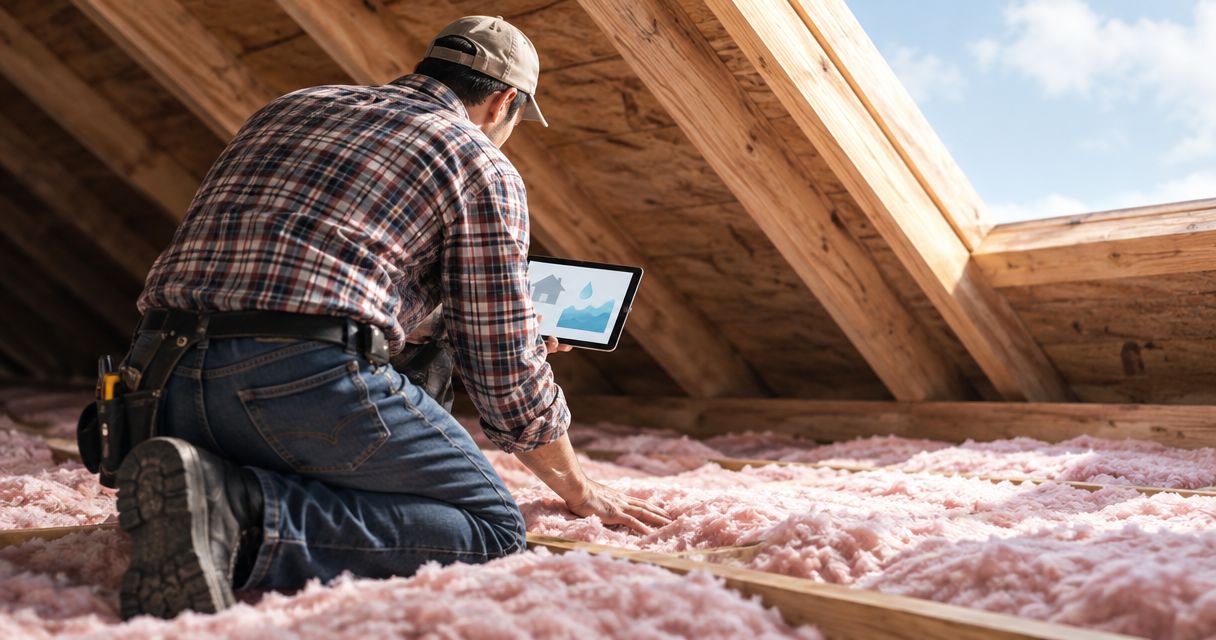
A roofer checks whether water is entering through your roof; an insulation contractor evaluates wet attic insulation and whether it needs removal or replacement. If the moisture comes from condensation, plumbing, or heating and cooling equipment, the matching trade needs to address that source before you close up the attic.
- For roof repair huntsville al searches involving wet insulation, start by identifying the water source, not replacing insulation alone.
- Thoughtfulroofer provides residential roof repair and replacement; confirm who will assess and handle wet insulation before approving work.
- A roof repair does not automatically include insulation removal, drying, ceiling repairs, or mold cleanup.
- Separate aging-roof decisions from storm-damage claims; roof damage does not guarantee insurance coverage.
Why this matters
Wet insulation is evidence of a moisture problem, not proof that the roof needs replacing. Rain entry, condensation, plumbing leaks, and air-conditioning drainage problems call for different repairs. Choosing the wrong starting point leaves the source unresolved.
Thoughtfulroofer is best suited to homeowners in Huntsville, Madison, and Owens Cross Roads seeking residential roof repair or replacement. You can start a roofing inquiry through Thoughtfulroofer, while asking separately who will inspect the insulation and any interior damage.
For a 2026 repair estimate, ask for 2 separate scopes: stopping the water and dealing with the materials that got wet. These tasks can involve different contractors, even when they relate to the same leak.
Roof repair in Huntsville: who checks wet attic insulation?
Start with a roofer when the wet area appears after rain, sits beneath a suspected roof defect, or accompanies visible roof damage. Start with the appropriate plumbing or heating and cooling contractor when water appears around that equipment. If the source is uncertain, describe the timing and location rather than naming a cause yourself.
Use these 4 inspection steps to organize the visit and the estimate:
- Document the moisture. Photograph accessible stains, drips, and wet insulation without walking on ceiling drywall or disturbing suspect materials. Record when you first noticed the problem and whether it followed rain or equipment use.
- Check the roof. Ask the roofer to evaluate the covering, flashing, roof penetrations, and accessible underside of the roof near the affected area. Water can travel before it becomes visible, so the stain is a starting point, not necessarily the entry point.
- Evaluate the insulation. Ask an insulation contractor to assess the affected material, its condition, and the appropriate drying or removal approach. Visible surface dryness alone does not establish that the surrounding assembly is dry.
- Confirm the scope. Get written responsibility for the roof repair, moisture assessment, insulation work, and any ceiling repairs. Identify exclusions before signing.
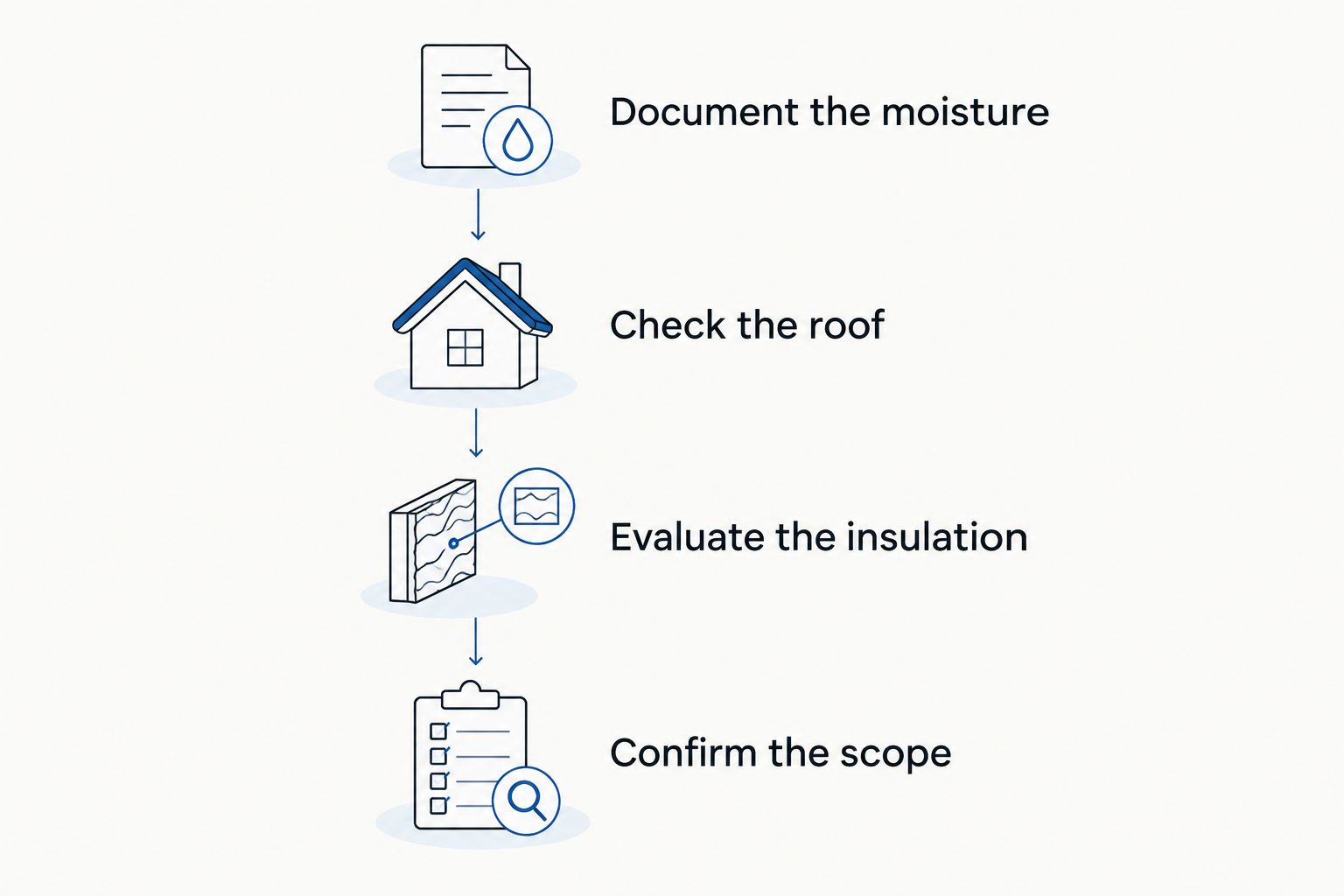
Keep the photographs and written findings together in your 2026 inspection record. That makes it easier to compare estimates addressing the same damage rather than proposals with different assumptions.
Which contractor handles each part of the problem?
The right contractor depends on the task. A roofing estimate should not be read as an insulation-remediation estimate unless that work is expressly included.
| Professional | Best for | Useful contribution | Boundary to confirm |
|---|---|---|---|
| Roofing contractor | Suspected rain entry or damaged roofing | Evaluates roofing and proposes repair or replacement | Insulation, drying, and interior work are not automatically included |
| Insulation contractor | Assessing and replacing affected insulation | Evaluates insulation condition and replacement scope | The moisture source still needs correction |
| Water-damage restoration professional | Assessing moisture in affected building materials | Evaluates drying needs and affected areas | Roofing repairs require a separate, clearly assigned scope |
| HVAC contractor or plumber | Moisture connected to equipment, drains, or pipes | Checks the relevant equipment or plumbing | Does not replace a roofing inspection when roof damage is also present |
Ask who is actually performing each task, not just who is coordinating it. A single point of contact is helpful, but you still need to know which work the agreement covers.
If you see suspect mold growth or smell a persistent musty odor, ask whether a qualified assessment is needed before disturbing the insulation. Do not assume that removing a stained section resolves moisture elsewhere in the attic.
What should the attic inspection explain?
A useful explanation connects the observed damage to the proposed repair. It should distinguish what the contractor saw from what still needs investigation.
Ask these 3 inspection questions:
- Where is the water entering or forming? Request an explanation tied to observations, such as damaged flashing, an active pipe leak, or condensation on a surface.
- Which materials are affected? Ask whether the concern involves insulation alone or also roof decking, framing, ceiling drywall, or other nearby materials.
- What needs checking before the area is closed? Establish how the responsible contractor will assess remaining moisture and confirm that the proposed work is complete.
Photos help you understand the explanation, especially when attic access is limited. They do not replace an inspection, and a photo of a stain does not establish the full extent of concealed damage.
Ask for findings you can understand before choosing the repair. If an estimate lists replacement materials without identifying the moisture source, request that explanation first.
Why the repair scope varies
Wet attic insulation does not lead to the same repair on every house. These factors change which work belongs in the estimate:
- Water source. Rain entry requires a different correction from a leaking pipe, equipment drain, or condensation problem.
- Affected area. An isolated wet spot and moisture spread across the attic require different investigations and material scopes.
- Insulation material. Different insulation materials respond differently to wetting; ask for a recommendation specific to what is installed.
- Roof and decking condition. A repairable roof defect differs from widespread deterioration or damaged roof decking.
- Access and safety. Restricted attic access, electrical hazards, and unstable materials affect how inspection and repair proceed.
- Contamination concerns. Suspect mold growth or contaminated water requires assessment beyond simply adding dry insulation.
If the inspection finds deteriorated wood beneath the roof covering, read about what happens when roof decking is rotten. Decking repairs and insulation replacement address different parts of the roof assembly; neither should disappear into an unexplained allowance.
Does wet attic insulation mean I need a new roof?
Wet attic insulation alone does not establish that you need roof replacement. The decision depends on the source of the moisture, the roof's overall condition, and whether a repair addresses the identified defect.
For an aging roof, ask the contractor to separate the immediate leak from the broader replacement decision. A localized repair addresses a specific defect, but it does not renew worn materials elsewhere. Replacement addresses a larger roofing scope, but wet insulation and interior damage still need assigned responsibility.
For storm damage, ask what physical damage the inspection identified and where it appears. Keep those findings separate from assumptions about insurance payment. Your insurer determines coverage under the policy; a contractor's recommendation is not a coverage decision.
When comparing 2026 roof proposals, compare the findings and included work rather than treating the longest estimate as the most complete. Ask what would remain unresolved after each option.
Can I leave wet attic insulation until the roof is fixed?
Wet attic insulation needs assessment alongside the source repair; scheduling the roof work does not answer whether affected materials can remain safely in place. Ask the responsible contractor what needs removal, drying, or protection while the permanent repair is arranged.
Do not enter an unsafe attic, handle wet electrical equipment, or walk on ceiling drywall. If water is near electrical fixtures, keep clear and arrange qualified help. A sagging ceiling also warrants keeping people away from the affected area.
Avoid covering wet insulation with new material. That hides the condition you need evaluated and does not correct the water source.
Will insurance pay for wet attic insulation after a storm?
Insurance coverage for wet attic insulation depends on the policy and the facts of the loss; storm damage does not guarantee payment or a free roof. Document what you observe and ask the insurer what information it requires.
Keep dated photos, inspection findings, estimates, and receipts for any protective work. For a 2026 storm claim, record the actual dates of the event, discovery, and contractor visits rather than assigning every stain to the same incident.
Tell the roofer about a claim, but keep repair recommendations and coverage decisions separate. Thoughtfulroofer provides roofing services; insurance questions belong with your insurer or an appropriately qualified adviser.
What should I ask before approving the work?
Before approving a 2026 repair or replacement estimate, make sure you can explain the plan back in plain language. You should understand what caused the problem, which materials need attention, and who will handle each part.
Use this scope checklist:
- Roof work: What defect is being repaired, or why is replacement recommended?
- Insulation work: Who evaluates, removes, and replaces affected insulation?
- Moisture assessment: Who determines whether surrounding materials need drying or further investigation?
- Interior repairs: Are ceiling repairs included, excluded, or assigned to another contractor?
- Concealed damage: How will additional findings be documented and approved?
- Completion: What photos, findings, or other records will explain the finished work?
A repair is sensible when it addresses an identified defect in a roof that remains suitable for repair. Replacement deserves consideration when the inspection supports a broader roofing problem. Neither choice automatically includes insulation work, and neither should be selected solely because insulation is wet.
Discuss your roof concerns
Ask Thoughtfulroofer about roof repair or replacement and clarify what the proposed scope includes.
FAQ
Who should I call first for wet attic insulation in Huntsville?
Call a roofer first when rain entry or roof damage is suspected. If moisture appears connected to plumbing or heating and cooling equipment, contact the matching trade and arrange insulation assessment as needed.
Does a roofer replace wet attic insulation?
A roofer replaces wet attic insulation only when that work is included in the agreed scope. Ask who will evaluate the material, perform any removal, and install replacement insulation.
Can condensation make attic insulation wet without a roof leak?
Yes, condensation can wet attic insulation without rain entering through the roof. The inspection needs to distinguish condensation from roof leaks, plumbing leaks, and equipment-related moisture before recommending repairs.
Does wet insulation always need to be thrown away?
Wet insulation does not have a single removal rule that applies to every material and situation. An assessment should consider the insulation type, its condition, the water source, and any contamination before recommending drying or replacement.
Can I just put new insulation over the wet area?
Do not cover wet insulation with new insulation before the moisture problem is assessed. Identify and correct the source, then establish what affected material needs removal, drying, or replacement.
Will roof replacement fix all the attic damage?
Roof replacement does not automatically repair wet insulation, damaged ceilings, or other interior materials. Those tasks need to be expressly included or assigned to another contractor.
Does storm damage mean insurance will cover my roof and insulation?
Storm damage does not guarantee insurance coverage for your roof or insulation. Coverage depends on your policy and the circumstances, and the insurer makes that decision.
One last thing
The wettest visible spot is not necessarily directly beneath the roof defect. Water can travel along roof materials or framing before reaching insulation and ceiling drywall.
Before you approve work, ask the contractor to explain the connection between the suspected entry point and the affected attic area. That explanation matters more than a confident guess based only on the ceiling stain.