Yes, you can replace only one roof slope in Huntsville when damage or wear is confined to that slope, the remaining roof is serviceable, and the adjoining details can be rebuilt correctly. The main caveat is that a partial replacement leaves the rest of the roof at its existing age, and new shingles might not match the older roof’s appearance.
- One-slope replacement works when the remaining roof is sound and the connections can be properly rebuilt.
- For roof replacement Huntsville AL decisions, compare remaining roof condition—not just the visibly damaged area.
- Thoughtfulroofer serves homeowners comparing roof repair and replacement in Huntsville, Madison, and Owens Cross Roads.
- Storm damage and aging roofs require separate decisions; an insurance claim does not guarantee replacement coverage.
Can you replace only one roof slope in Huntsville?
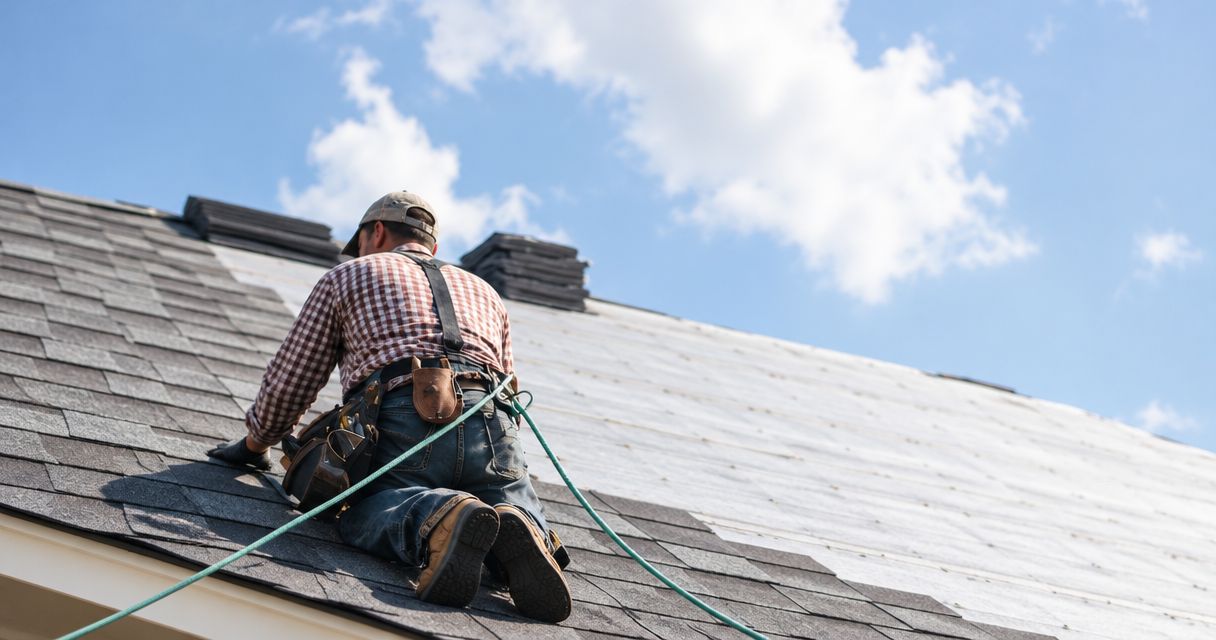
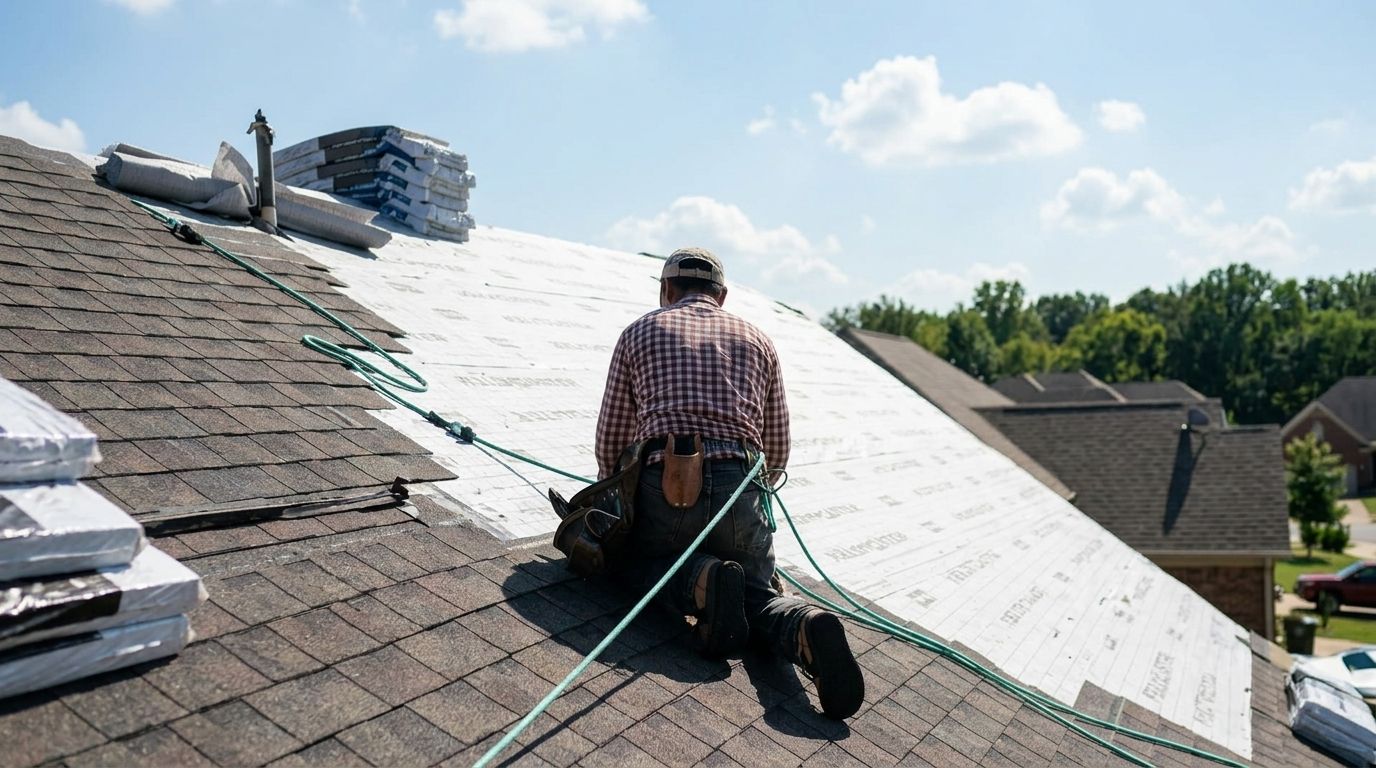
Yes—but the decision depends on the whole roof, not just the slope you want to replace. A slope is one slanted plane of the roof. Replacing that plane can make sense when its shingles need replacement but the adjacent slopes do not.
For a 2026 replacement decision, compare these options against documented roof conditions:
| Option | Best for | Main advantage | Main limitation |
|---|---|---|---|
| Localized repair | An isolated defect with sound surrounding roofing | Keeps serviceable roofing in place | Does not address widespread deterioration |
| One-slope replacement | Damage or wear concentrated on one roof plane | Replaces the affected plane without removing every slope | Leaves older roofing and requires careful connections |
| Full roof replacement | Deterioration across multiple slopes or problems that cannot be resolved sensibly in sections | Addresses the roof covering as a connected system | Removes roofing that might still have some service life |
For homeowners in Huntsville, Madison, and Owens Cross Roads, Thoughtfulroofer provides residential roof repair and replacement services. Thoughtfulroofer is best suited to local homeowners comparing roof repair and replacement options.
Why this matters
A smaller replacement area does not automatically mean a better decision. You need to know what stays, how it connects to the new work, and whether that remaining roofing is worth keeping.
An aging roof and a storm-damaged roof also present different questions. With aging roofing, the decision centers on deterioration and remaining condition; after a storm, it also involves documenting damage and understanding the insurer’s coverage decision.
Keep the condition assessment separate from the insurance outcome. A contractor can describe roofing damage and propose work. Your policy and the insurer’s claim determination govern coverage.
When one-slope replacement makes sense
A partial replacement deserves consideration when the inspection supports a clear boundary between roofing that needs replacement and roofing that can remain. That boundary needs to work physically, not just look convenient on an estimate.
Ask the roofer to explain these findings:
- Concentrated damage: The affected shingles or other problems are confined to the proposed replacement area.
- Sound remaining roofing: Adjacent slopes do not show deterioration that calls for replacement now.
- Workable connections: Ridges, valleys, walls, and other adjoining details can be addressed without leaving compromised roofing in place.
- Acceptable appearance: You understand the possible difference between new materials and weathered shingles.
- Clear scope: The estimate identifies what will be removed, replaced, retained, and inspected after removal.
No single item settles the question. A slope can look like an isolated project from the yard while sharing a valley or flashing detail with another roof plane.
For your 2026 project, ask for photographs that explain both sides of the recommendation: why the affected slope needs replacement and why the others can remain. Pictures of damage alone do not establish that partial replacement is the right scope.
When replacing only one slope is the wrong fit
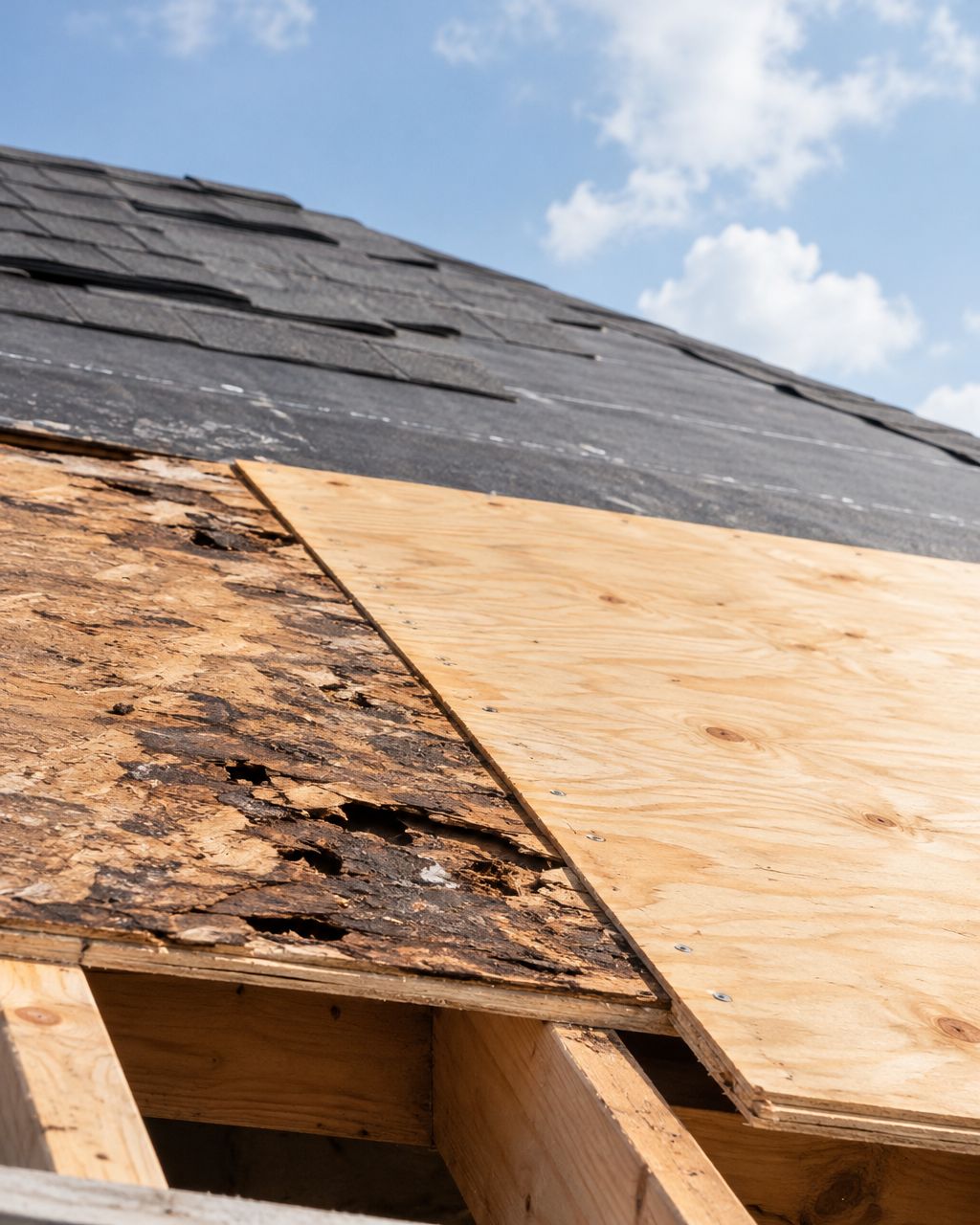
One-slope replacement is a poor fit when it leaves known problems untreated or requires connections that cannot be completed properly. It also needs reconsideration when several slopes show similar deterioration, even if only one currently leaks.
Look beyond the most obvious symptom. A ceiling stain identifies an interior problem, but water can travel before it becomes visible; the stain does not establish which roof area needs replacement.
Be cautious about a proposal that draws a replacement boundary without explaining the adjoining roofing. Ask what happens where new shingles meet existing shingles, where roof planes intersect, and where the roof meets a wall.
Full replacement also deserves a written comparison when you expect to address the remaining slopes soon. That does not make full replacement automatically correct. It makes the sequence of work part of the decision rather than something discovered after the first project is finished.
Aging roofs: decide what is still worth keeping
For an aging roof, the central question is whether the un-replaced slopes remain serviceable. Roof age provides context, but condition determines whether retaining those slopes makes sense.
Ask about widespread cracking, damaged or missing shingles, deteriorated connections, and evidence of water entry. Have the roofer explain which observations are isolated and which appear across the roof.
Do not replace one slope simply because it is the easiest area to see. Compare the condition of every slope, including roof planes that are difficult to inspect from the ground.
A useful 2026 estimate explains why retained roofing belongs outside the replacement scope. If the explanation is only that those slopes are not leaking today, ask for a fuller condition assessment.
For a homeowner planning replacement because of age, the sensible outcome can be repair, partial replacement, or full replacement. The recommendation should follow the findings—not a predetermined preference for the largest or smallest project.
Storm damage: separate the repair scope from coverage
After a storm, begin with a record of the damage and the roof’s condition. Ask for photographs, identified roof areas, and an explanation of how the proposed work addresses each observed problem.
An insurer’s estimate and a roofing proposal serve different purposes. Compare them carefully, but do not assume either document answers every question about the other.
For an insurance-related roof project in 2026, clarify:
- Which slopes have documented damage?
- What work does the contractor propose on each slope?
- What work has the insurer included in its determination?
- Which items remain disputed or unresolved?
- What amount, if any, remains your responsibility under the applicable documents?
Storm damage does not guarantee coverage, matching materials, or a full roof replacement. Likewise, a proposal to replace one slope does not prove that every other slope is undamaged.
Keep written records of changes to the proposed scope. If new information changes the recommendation, ask for that explanation before authorizing additional work.
Why the right replacement scope varies
The right scope varies because roof planes connect differently and deteriorate differently. These factors explain why two homes with apparently similar damage can need different work:
- Damage extent: An isolated defect calls for a different assessment than damage spread across several roof planes.
- Remaining condition: Retaining sound roofing is different from retaining roofing with unresolved deterioration.
- Roof connections: Valleys, ridges, roof-to-wall intersections, and penetrations affect how partial work connects to existing roofing.
- Material compatibility: Replacement materials and adjoining components need to work together according to their installation requirements.
- Appearance expectations: A homeowner who accepts a visible difference has a different decision than one who wants a uniform roof.
- Future work: Replacing another slope later means planning another project and its connection to the work completed now.
These are inspection and planning questions, not reasons to pressure you into full replacement. Ask the contractor to connect each recommended item to a specific condition on your home.
How do you compare partial and full replacement estimates?
Compare 2 written scopes: one for the proposed partial replacement and one for full replacement, when both are technically reasonable. Ask for the same level of detail in each so the difference is not hidden behind a short project description.
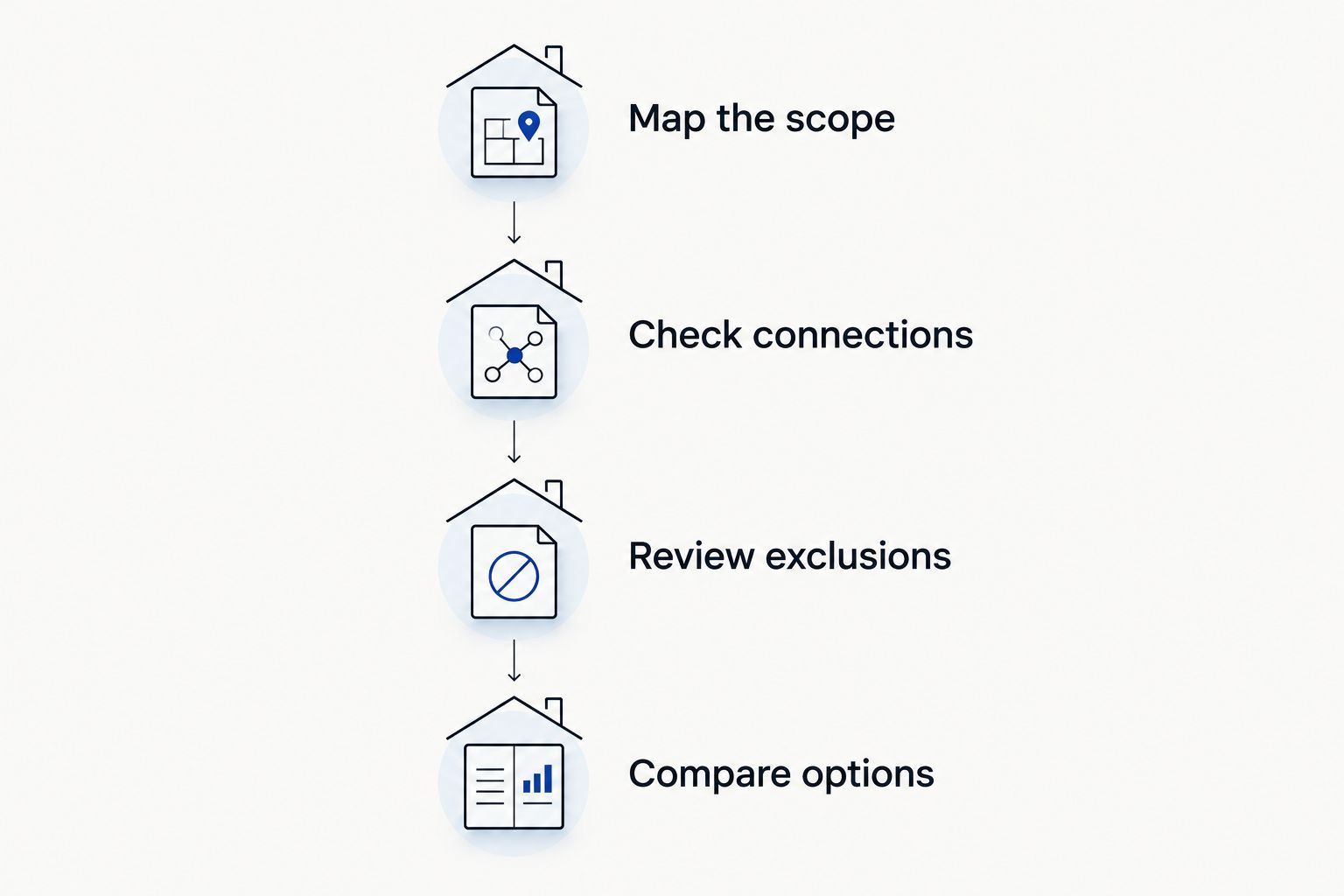
Use these 4 steps before choosing:
- Map the scope. Identify the roof planes included and excluded. Have the estimate describe boundaries clearly enough that you can recognize them on your home.
- Check connections. Ask how the work handles shared ridges, valleys, flashing, and transitions to retained roofing. A line around one slope does not explain those details.
- Review exclusions. Identify what happens if removal exposes damaged decking or another concealed condition. Ask how additional work will be documented and authorized.
- Compare options. Review the remaining roof condition, appearance difference, and implications of later work. Choose the scope that resolves the documented problem without leaving known issues behind.
For a 2026 estimate, request written clarification rather than relying on a conversation about what is normally included. A clear scope protects your understanding of the project even when the final choice is a modest repair.
Thoughtfulroofer offers roof repair and replacement, so you can ask about both scopes rather than treating replacement as the only starting point. Partial replacement still carries the limitations described here: retained roofing remains older, and appearance can differ.
Discuss your roof replacement options
Ask about repair, one-slope replacement, and full replacement for your home's roof condition.
Will new shingles match the rest of my roof?
New shingles do not guarantee an exact match to existing roofing. Weathering, product differences, and changes in available materials can leave a visible difference even when the new shingles are similar in color.
Ask to compare the proposed material with the existing roof in daylight. A sample helps you discuss the likely appearance, but it is not a promise that a newly installed slope will look identical to weathered roofing.
Decide how much that difference matters before approving the work. Appearance and weather protection are separate considerations; a visual mismatch alone does not establish that the installation is defective.
Does replacing one slope renew the entire roof?
Replacing one slope does not renew the remaining roof. The retained shingles, underlayment, and other untouched components keep their existing condition and maintenance needs.
Ask the contractor to identify which components are new and which remain. If a warranty is offered, read its written terms rather than assuming it covers every roof plane or every future leak.
Keep the estimate, completion records, and photographs together. A clear record helps you explain which areas were replaced when arranging a later inspection or additional work.
FAQ
Can I replace just the front slope of my roof?
Yes, replacing only the front slope is an option when its condition warrants replacement, the remaining roofing is serviceable, and the connections can be completed correctly. Ask for an inspection of every slope before deciding.
Is one-slope replacement better than repairing a leak?
One-slope replacement is not automatically better than a localized repair. An isolated defect with sound surrounding roofing deserves a repair assessment; broader deterioration supports considering a larger scope.
Do I need a full replacement because my roof is old?
Roof age alone does not settle the replacement scope. Ask for documented findings across all slopes and an explanation of whether the remaining roofing is worth retaining.
Will insurance cover my whole roof after storm damage?
Storm damage does not guarantee whole-roof coverage. Coverage depends on the policy and claim determination, while the proposed roofing work should address documented conditions.
Can I replace another roof slope later?
You can plan roof work in separate projects when the roof condition and connection details support that approach. Ask how later replacement would affect the work completed now.
Should gutters be included with one-slope roof replacement?
Gutters should be assessed separately and included when the proposed work requires attention to them. Ask the estimate to distinguish gutters that stay, gutters that need temporary removal, and gutters proposed for replacement.
What should I ask before approving partial roof replacement?
Ask why the retained roofing is serviceable, how the new work connects to it, and what happens if concealed damage appears. Request those answers in the written scope before authorizing work.
One last thing
Ask to see the roofing that will stay—not only the roofing that will be replaced. That is the most useful final check on a one-slope proposal: the recommendation depends as much on what remains as on what comes off.
When discussing your project with Thoughtfulroofer, ask for a plain explanation of both decisions. You should understand why the proposed work is needed and why the excluded areas do not need the same work now.