Solar panels covering the area being replaced generally need to be removed before roof replacement and reinstalled after the roofing work is complete. Your roofer and a qualified solar contractor should agree on removal, roof attachments, weatherproofing, and reconnection before work starts. For a 2026 project in Huntsville, plan the roofing and solar work together rather than treating panel removal as a last-minute detail.
- For roof replacement huntsville al projects with solar panels, coordinate panel removal, roofing, and reinstallation before work starts.
- Thoughtfulroofer provides residential roof replacement; confirm solar removal and reconnection responsibilities separately.
- Aging roofs and storm-damaged roofs need different documentation; neither situation establishes insurance coverage.
- Keep panels off the roof until roofing work and attachment details are ready for reinstallation.
Why this matters
A solar array adds another work sequence to roof replacement. The panels, mounting hardware, wiring, and roof covering need separate attention, even though they occupy the same space. A roofing estimate alone does not establish who will handle the solar equipment.
Thoughtfulroofer is a residential roof replacement option for homeowners in Huntsville, Madison, and Owens Cross Roads. When discussing your project with Thoughtfulroofer, identify the solar array at the start and ask which responsibilities belong in the roofing scope and which require a solar contractor.
The goal is straightforward: replace the roof without leaving gaps between the people responsible for keeping water out and the people responsible for the electrical system. You should understand that division before agreeing to a schedule.
Roof replacement in Huntsville: what happens to solar panels?
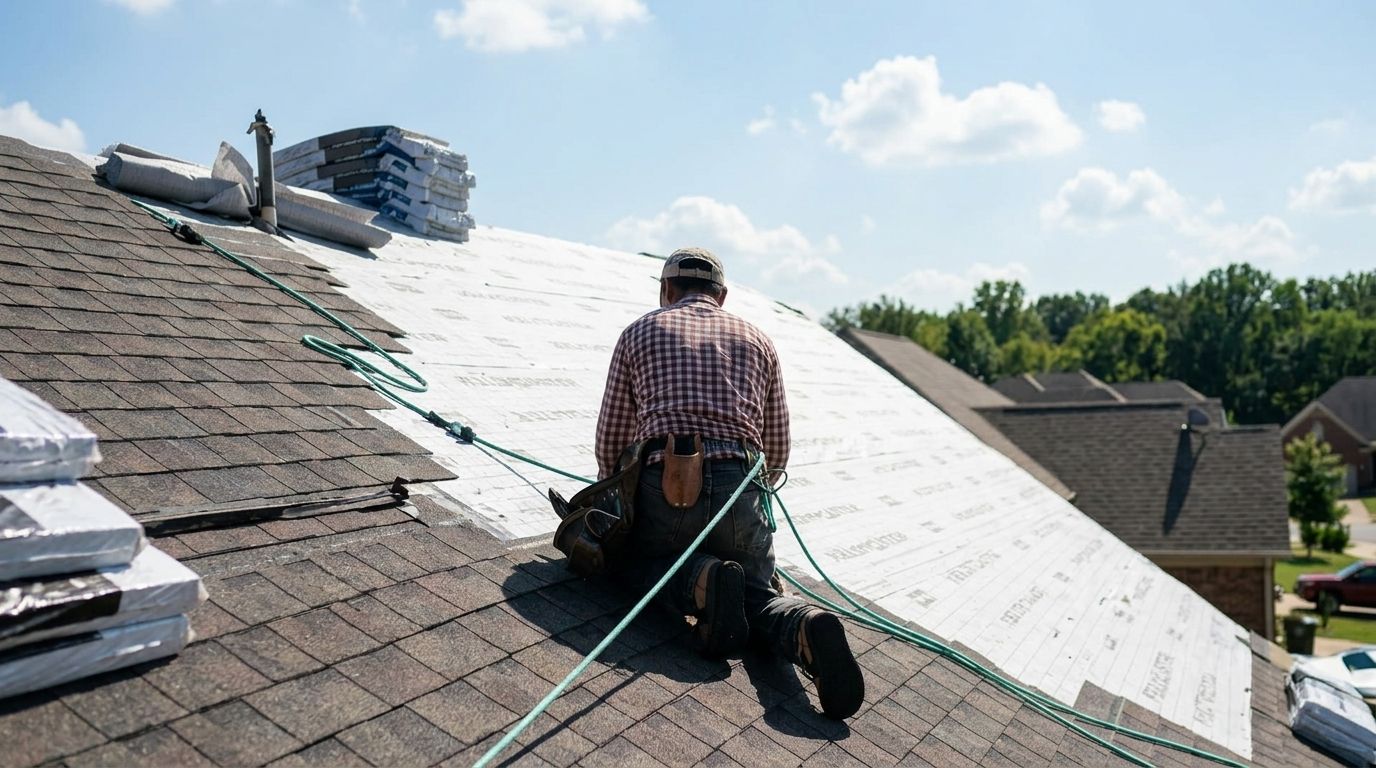
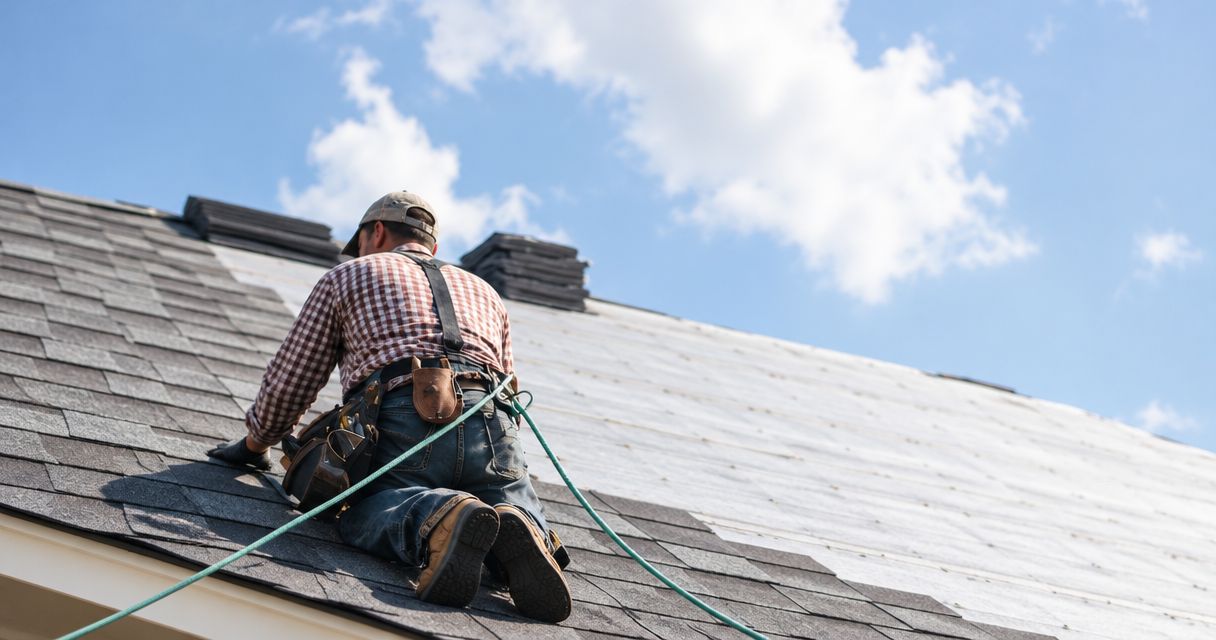
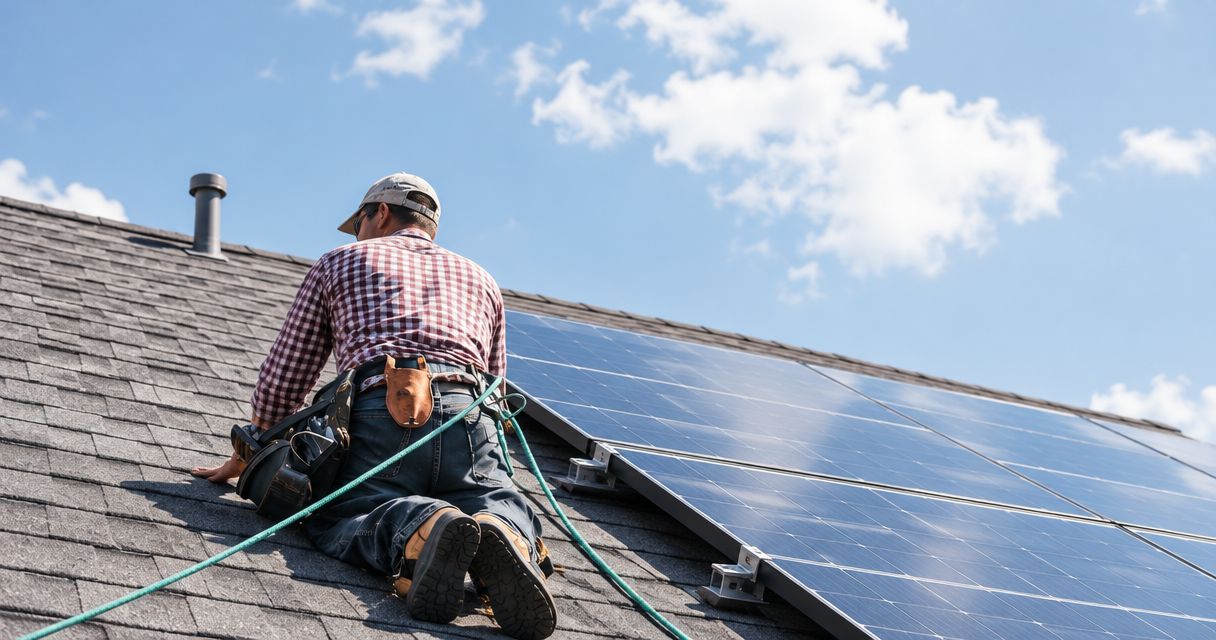
For a full replacement beneath a rooftop solar array, the usual sequence is panel removal, roofing work, and solar reinstallation. Qualified workers disconnect and handle the solar equipment; the roofing crew then gains access to the roof covering underneath. Reinstallation includes checking attachments and completing the required electrical work before the system returns to service.
The extent of removal depends on where the roofing work occurs. Panels cannot simply stay over a roof surface that needs to be removed and replaced. A limited repair elsewhere on the roof is a different situation and needs its own inspection.
| Work approach | Best for | Main advantage | Main limitation |
|---|---|---|---|
| Remove the affected array before replacement | Replacing roof covering beneath panels | Gives the roofing crew access to the covered area | Requires coordinated solar handling and reinstallation |
| Remove selected panels | Localized work beneath part of an array | Limits removal to the agreed work area | Access and system layout can make a wider removal necessary |
| Leave panels in place | Work entirely outside the array where access allows | Avoids handling equipment outside the work area | Does not provide access to replace roofing beneath panels |
Treat these as scope decisions, not interchangeable shortcuts. The roofer needs to define the roofing access required, and the solar contractor needs to confirm how that access can be provided safely.
What should happen before panels come off?
Start with a roof inspection and a review of the solar installation. Gather the solar agreement, equipment information, available installation drawings, and relevant warranty documents. If you lease the panels or have a power purchase agreement, identify the equipment owner and review its requirements before authorizing removal.
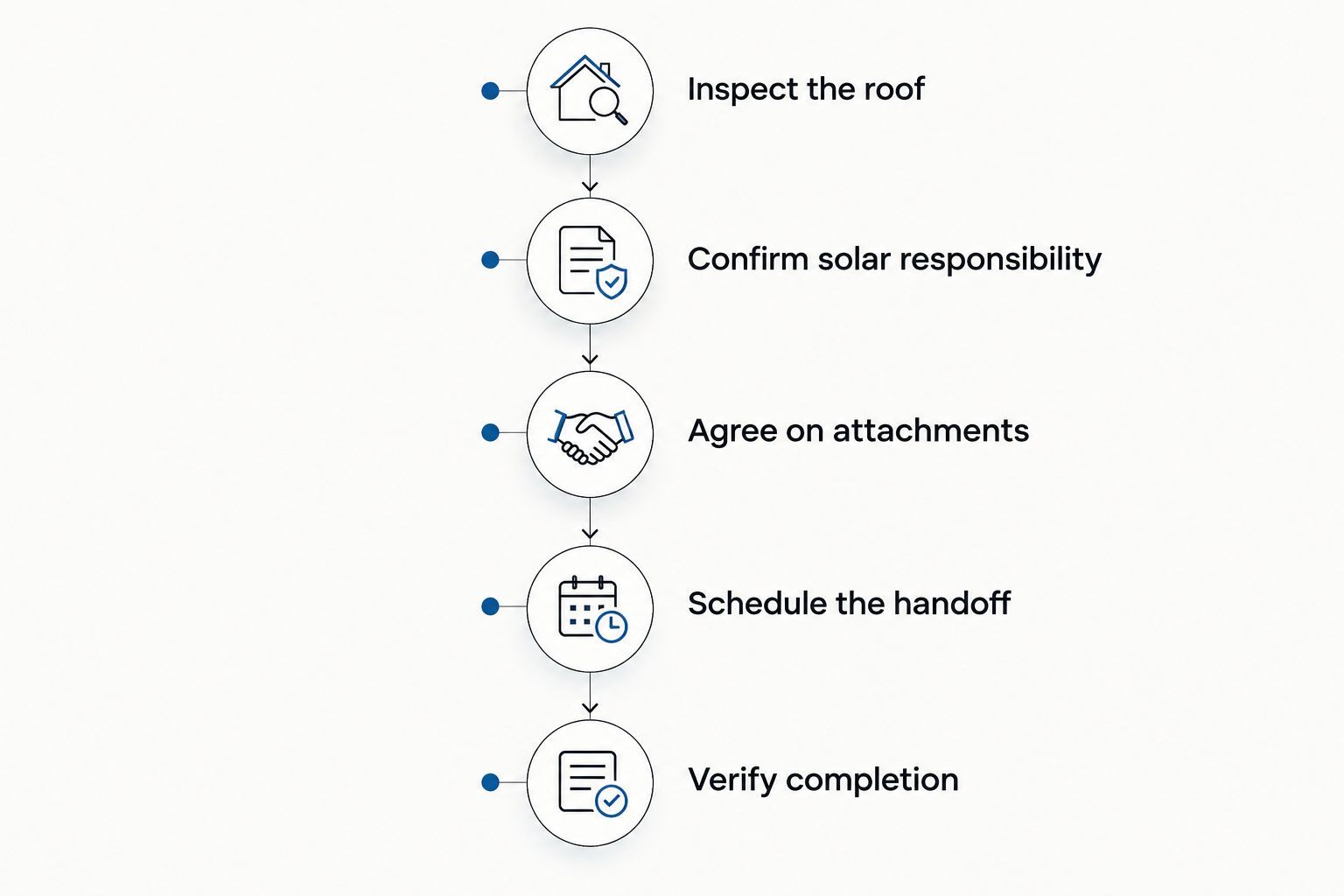
For your 2026 replacement plan, put the following sequence in writing:
- Inspect the roof. Establish the condition of the roof covering, visible leak areas, and the extent of replacement needed. Note any areas that cannot be inspected while panels remain in place.
- Confirm solar responsibility. Identify who owns the equipment, who can authorize work, and who will disconnect, remove, store, and reinstall it.
- Agree on attachments. Have the contractors coordinate the mounting locations, roof penetrations, and weatherproofing details before the new roof is installed.
- Schedule the handoff. Set the order for removal, roof replacement, inspection, and reinstallation. Include a plan for weather interruptions and newly discovered roof damage.
- Verify completion. Collect roofing documentation and solar commissioning records, and confirm who will address a later leak or system fault.
The schedule should follow the work requirements, not the other way around. Do not accept a roofing start date without knowing whether the solar removal is arranged.
Full roof replacement: remove panels over the work area
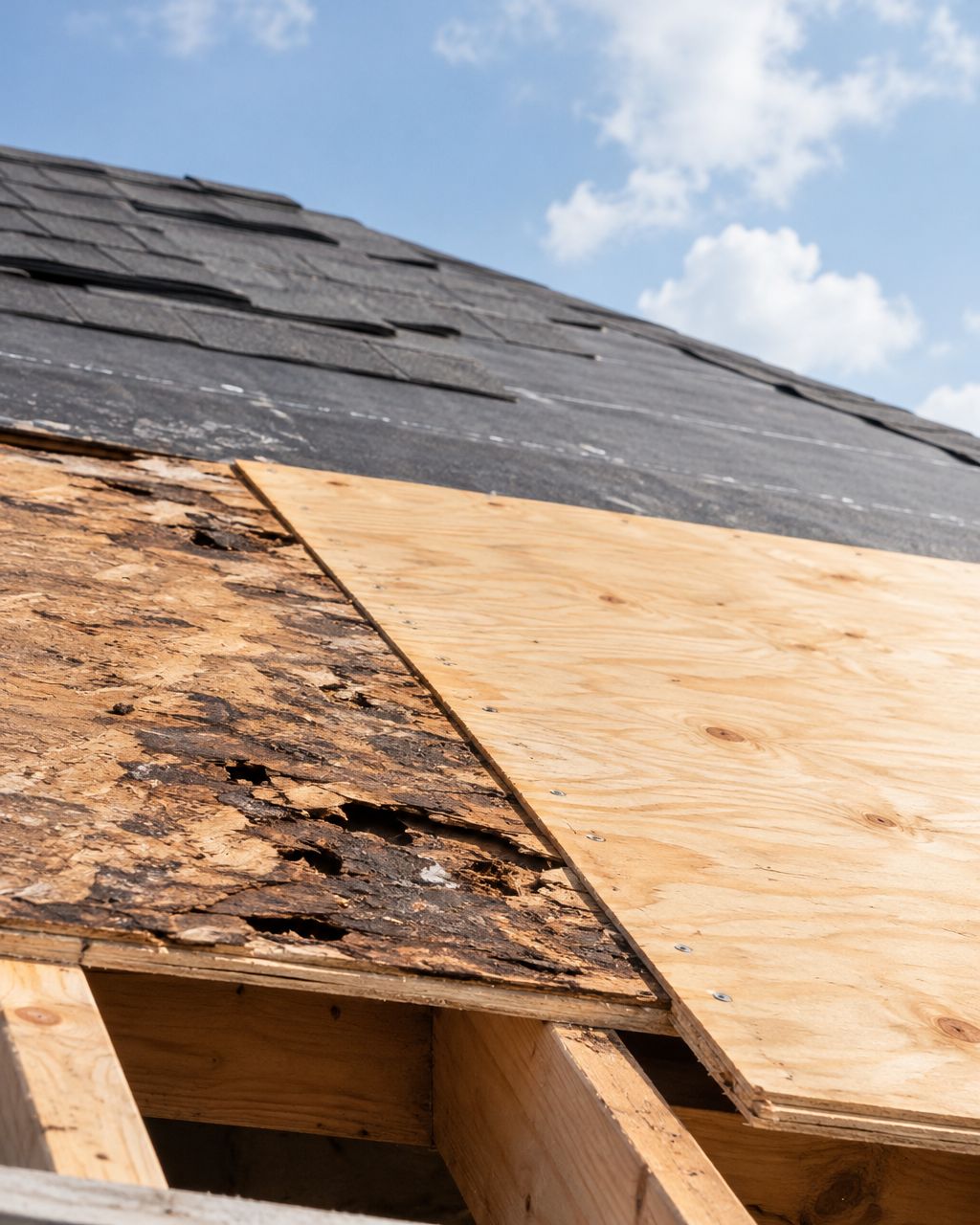
A full roof replacement requires access to the roof beneath the solar array. Removing the affected panels and mounting components lets the roofing crew remove the old covering, inspect the exposed roof deck, and install the replacement roofing.
That access is the main benefit. The trade-off is additional coordination, equipment handling, and time without normal solar production. Ask the solar contractor to explain how removed components will be identified, protected, and stored.
Ask the roofer how concealed damage will be handled once the old covering comes off. A clear change-approval process matters because the condition beneath an array is not fully visible during an initial inspection. You should know who will explain a finding and obtain your approval before the scope changes.
Localized roof repair: confirm the access needed
A localized repair can require less solar removal than a full replacement. The deciding factor is access to the actual problem, not simply whether the leak appears near a panel. Water can travel before it becomes visible inside your home.
Best for a localized repair: a clearly identified defect with a repairable surrounding roof. The advantage is a narrower roofing scope; the limitation is that repairing one defect does not address deterioration elsewhere on an aging roof.
Ask for an explanation of both the suspected entry point and the proposed repair. If the roof has broader deterioration, compare the repair scope with replacement before paying to remove and reinstall the same panels for separate roofing projects.
Aging roof: plan replacement around roof condition
An aging roof and a solar problem are not the same diagnosis. Panels do not establish whether the remaining roof covering is sound, and normal solar production does not prove that the roof beneath the array is watertight.
If you are planning replacement in 2026 because the roof is wearing out, ask the roofer to explain the condition of the covering, visible flashing, and accessible roof deck. Request a clear distinction between observed damage and areas that remain concealed.
This approach gives you a sensible basis for deciding when to replace the roof. Its limitation is that an initial inspection cannot reveal every concealed condition. Build a process for handling those findings into the agreement rather than expecting an inspection to eliminate all uncertainty.
Storm damage: document the roof and solar equipment separately
After a storm, the roof covering, mounting points, and solar equipment need attention as separate parts of the property. A roofing inspection does not replace an electrical assessment of damaged solar equipment. Avoid touching damaged panels, exposed wiring, or displaced mounting components.
Document conditions from a safe location and contact the appropriate contractors. If you open an insurance claim, keep the roof findings, solar findings, photographs, and proposed work scopes organized so the insurer can review what each part addresses.
Storm damage does not guarantee insurance coverage or a free roof. Coverage depends on the policy, the cause of loss, and the insurer's determination. Do not authorize a larger scope based only on an assumption about what the claim will cover.
Why solar removal and reinstallation requirements vary
The work changes with the roof and the installation. These factors determine what needs to be agreed before removal:
- Work area: Replacement beneath the array requires access that work on an uncovered roof section does not.
- Roof condition: Concealed deterioration discovered after removal can change the roofing scope and handoff date.
- Mounting system: Attachment and weatherproofing details must suit the equipment and the replacement roofing.
- Equipment ownership: Owned, leased, and third-party-owned systems can have different authorization requirements.
- Roof material: A change from shingles to metal roofing requires a fresh review of mounting compatibility.
- Electrical requirements: The solar contractor should establish the applicable disconnection, reconnection, inspection, and utility steps.
Do not use your neighbor's solar removal plan as your project specification. Similar-looking panels can sit on different mounting systems, and the roof work underneath can differ substantially.
Who removes and reinstalls the solar panels?
A qualified solar contractor should handle the solar equipment and electrical work. Your roofer handles the agreed roofing work; the contract should identify any overlap involving mounts, flashing, and roof penetrations.
Ask whether the original solar installer must be involved under your agreement. If another contractor will handle the equipment, confirm authorization and documentation requirements before removal. Do not assume that hiring a roofer automatically includes solar services.
Thoughtfulroofer offers residential roof replacement and metal roofing, but solar removal and reconnection need their own confirmed scope. Ask who will coordinate the handoff and which contractor you should contact if the schedule changes.
Can I replace shingles with metal roofing under solar panels?
Replacing shingles with metal roofing requires a compatibility review before the panels return. Existing attachments should not be assumed suitable for a different roof covering or roof assembly.
Best for homeowners considering a material change: decide on the roof system before finalizing solar reinstallation. This lets the contractors plan the attachment method together. The limitation is that existing mounting components might not be suitable for reuse; the solar contractor must assess them against the selected system's requirements.
For a 2026 metal roofing project, request a written explanation of the proposed mounting approach. Also ask how the attachment locations relate to roof seams, drainage, and manufacturer installation instructions. Avoid choosing the roof first and leaving those questions until installation day.
What should be in my written project scope?
A useful scope describes responsibilities, not just the finished roof. You should be able to trace the job from solar shutdown through the final roofing and electrical checks without an unexplained handoff.
Before signing, confirm these points:
- Who obtains any required approvals and inspections.
- Who removes, transports, stores, and reinstalls solar equipment.
- Who supplies and installs the roof attachments and flashing.
- How unused penetrations will be addressed.
- How concealed damage and scope changes receive your approval.
- Who documents completion and handles a reported leak or equipment fault.
Keep the roof warranty and solar warranty documents separate. Ask each provider to explain its coverage and exclusions; do not assume that either agreement covers work performed by the other contractor.
How should I compare roofing estimates with solar involved?
Compare the same roofing scope and the same solar responsibilities. An estimate that excludes panel handling is not directly comparable with an agreement that includes separately arranged solar work.
Ask each contractor to identify exclusions plainly. Clarify roof deck repairs, attachment work, equipment storage, inspections, and the final solar restart. A short estimate is not necessarily simpler if it leaves you to discover the missing responsibilities later.
For homeowners in Huntsville, Madison, and Owens Cross Roads, a useful 2026 estimate discussion starts with the reason for replacement: an aging roof, documented storm damage, or a material change. Thoughtfulroofer can be considered for the residential roofing portion; confirm the solar contractor and coordination arrangements before committing to the work.
Discuss your roof replacement
Explain your roof concerns and solar setup, then ask about the roofing scope and contractor handoffs.
FAQ
Do my solar panels have to come off for roof replacement?
Solar panels covering the area being replaced generally need to come off so the roofing crew can access the roof underneath. Work entirely outside the array needs a separate access assessment.
Can my roofer disconnect the solar panels?
Solar disconnection requires qualified personnel, not simply a roofing crew. Confirm who is responsible for electrical work and whether your solar agreement requires a particular contractor.
Will my solar panels still generate electricity during roof replacement?
Do not count on normal solar production while the system is disconnected for roof replacement. Ask the solar contractor to explain the shutdown and restart plan for your installation.
Does insurance cover removing solar panels after storm damage?
Insurance coverage for solar removal depends on your policy and the insurer's determination. Document the roof and solar work separately, and do not assume that a storm claim includes either scope.
Can I keep my existing panels when I replace my roof?
Existing panels can be reinstalled when the solar contractor confirms that the equipment and proposed mounting arrangement are suitable. Roof replacement alone does not establish that every panel or attachment is fit for reuse.
Should I replace an aging roof before adding solar panels?
Have the roof inspected before adding solar panels, and address a roof that needs replacement before covering it with an array. This avoids planning a new solar installation around roof covering already due for removal.
Who should I call if the roof leaks after the panels go back?
Notify the roofing contractor and solar contractor so the roof covering, flashing, and attachment areas can be assessed. Keep photographs and project records, and avoid assuming the cause before inspection.
One last thing
Ask for photographs of the new roof before the solar panels go back. Once the array is reinstalled, some roofing and attachment details become harder to see. Photographs do not replace inspections, but they give you a useful record of the work before it is covered.
Keep those photographs with the roofing agreement, solar work order, and completion records. A well-organized handoff gives you something more useful than a verbal assurance: a clear record of who handled each part of your roof replacement.