
Yes, you can usually stay home during roof replacement in Huntsville if your contractor confirms that the house remains safe to occupy and you have a protected way in and out. Expect overhead noise, vibration, and restricted access around the work area; staying inside does not make the yard or driveway safe. Leave during disruptive work if you need quiet, cannot keep children or pets away from the job, or the contractor identifies a safety concern.
- Roof replacement Huntsville AL: staying home depends on safe access, household needs, and the contractor’s assessment.
- Thoughtfulroofer serves homeowners in Huntsville, Madison, and Owens Cross Roads with residential roof replacement and repair.
- Stay home if you can tolerate noise and remain clear of the work area.
- Arrange somewhere else to go if your household needs quiet or the contractor restricts occupancy.
- Storm damage does not guarantee insurance coverage; confirm the repair scope and claim separately.
Can you stay home during roof replacement in Huntsville?
Staying home is a practical choice only when safety and your household routine allow it. You do not have to leave simply because workers are replacing shingles, but you should not assume every replacement allows normal use of the house.
For a 2026 project, ask your contractor about occupancy before agreeing to the work plan. Thoughtfulroofer provides residential roof replacement, roof repair, metal roofing, and gutter services in Huntsville, Madison, and Owens Cross Roads.
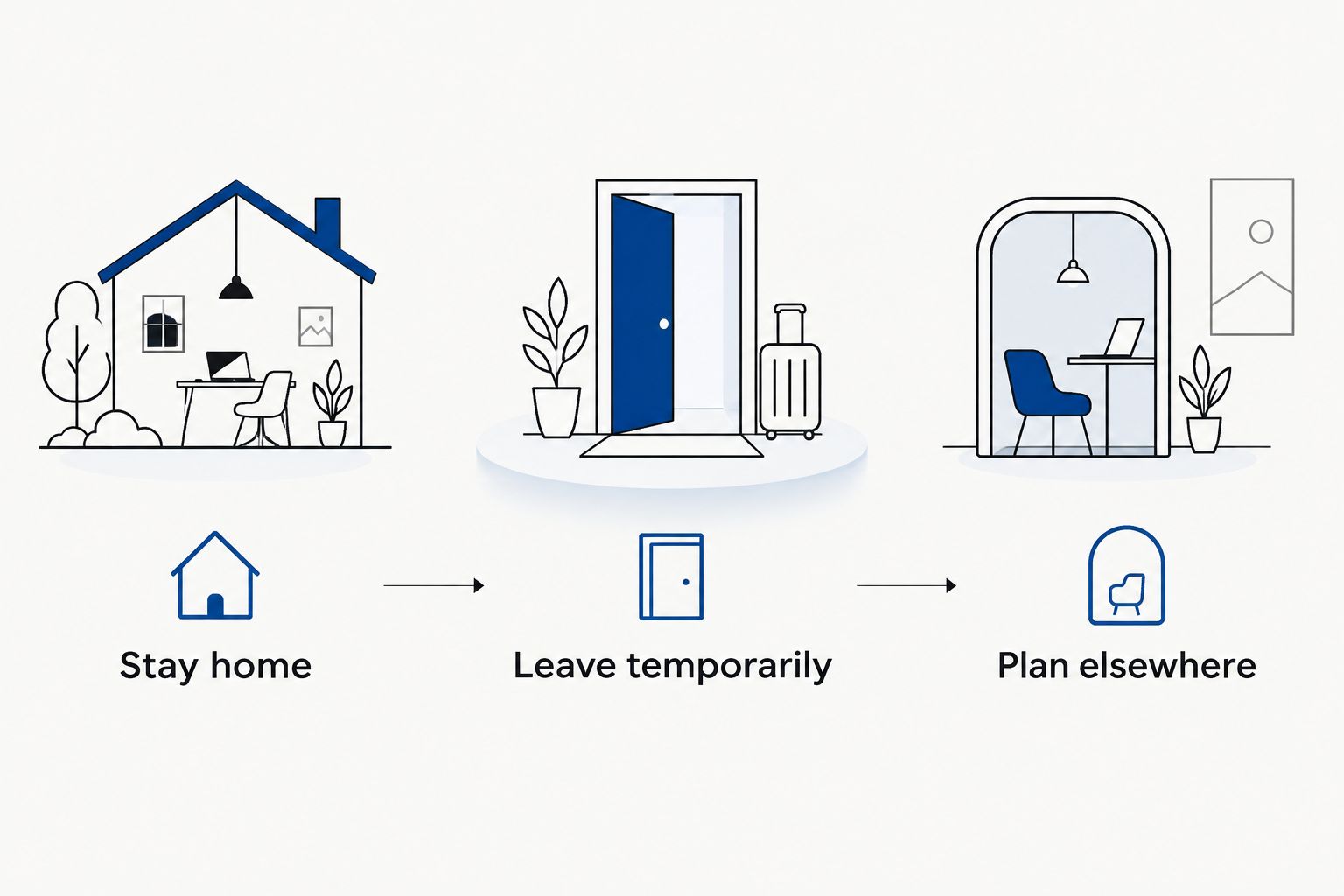
| Your plan | Best for | Main advantage | Main drawback |
|---|---|---|---|
| Stay home | Adults who can tolerate construction noise and stay inside | You remain available for questions | Noise and vibration interrupt normal routines |
| Leave temporarily | Homeowners with calls, appointments, or noise-sensitive pets | You avoid the work that disrupts you most | You need to coordinate departure and return |
| Plan elsewhere | Households needing quiet or facing occupancy restrictions | You separate daily life from the job | You must arrange another place to spend the work period |
None of these choices replaces the contractor’s safety assessment. A household preference cannot override a restricted entrance or an unsafe interior condition.
Why this matters
The question is not just whether you can sit indoors while someone works overhead. It is whether you can use your home without crossing active work areas, exposing a pet to falling debris, or depending on a quiet room that is not quiet during construction.
Decide this before installation day. If you discover the problem after tear-off begins, arranging childcare, moving a vehicle, or finding a place for a work call becomes harder.
Homeowners replacing an aging roof and homeowners dealing with storm damage need the same occupancy conversation. They also need different conversations about why the roof needs replacement and who is responsible for the work.
Staying home: best for a flexible household
Staying home makes sense when you can tolerate construction noise, keep exterior doors controlled, and avoid the crew’s work area. It also helps if your schedule allows interruptions rather than requiring uninterrupted sleep or confidential calls.
Choose an indoor room away from the busiest exterior activity when practical. That can reduce distractions, but a different room is not a promise of quiet: roof work transmits sound through the building.
Before your 2026 replacement, tell the contractor if you expect to remain inside. Ask which entrance to use, where materials will go, and whether any part of the plan requires you to leave.
Being present can make it easier to discuss an unexpected finding. You can also remain reachable by phone, so staying home is not necessary just to answer questions.
Leaving temporarily: best for specific disruptions
Leaving for part of the work is useful when your main concern is a meeting, a child’s nap, or a pet that reacts badly to pounding. Ask the contractor which planned activities are likely to be most disruptive rather than assuming the whole job sounds the same.
Make your exit before work blocks the route you intend to use. If your vehicle is in a garage beneath the work area, discuss moving it before materials, equipment, or a debris container occupy the driveway.
The drawback is coordination. Weather and unexpected roof conditions can change the sequence, so keep your plans flexible and confirm the return arrangements directly with the contractor.
Planning elsewhere: best for households needing quiet
Spending the work period elsewhere is the clearer choice when someone needs daytime sleep, cannot tolerate construction noise, or needs assistance that would be difficult around restricted access. It is also the right choice when the contractor says the house should not be occupied during a particular task.
Make arrangements around your household’s actual needs. A quiet workplace solves a meeting problem, but it does not necessarily solve childcare, pet care, or accessibility needs.
Ask how you will receive updates while away. Give the contractor a reliable contact method and agree on how decisions about additional work will reach you before work proceeds.
Why staying home during roof replacement varies
Your neighbor’s experience is not a dependable work plan for your house. These factors explain why one household stays comfortably while another leaves:
- Work scope: Removing roof covering, replacing damaged decking, and working around roof openings create different conditions. Ask what the proposed scope involves.
- Household routine: Remote meetings, daytime sleep, and caregiving affect how much disruption you can accept.
- Children and pets: Open doors, unfamiliar workers, and outdoor debris require a plan that keeps everyone clear of the job.
- Entry and driveway access: Material staging and debris handling affect where you can walk and park.
- Existing damage: A leak, storm opening, or damaged roof deck needs an individual safety assessment, not a general assurance that homeowners can stay.
- Weather and work sequence: Ask how the contractor will communicate schedule changes and protect exposed areas if conditions interrupt work.
Treat these as questions for your property, not reasons to expect trouble. A clear plan makes ordinary disruption easier to manage.
What should you arrange before replacement day?
Use this checklist for a 2026 roof replacement estimate or pre-work conversation. Get property-specific answers rather than relying on a general statement that everything will be fine.
- Confirm occupancy. Ask whether you can remain inside throughout the planned work and what circumstances would change that answer.
- Agree on access. Identify your entrance, the crew’s work area, and the route for leaving without walking beneath active work.
- Move vehicles. Ask where vehicles should be parked and when to move them. Do not wait until the driveway becomes part of the work area.
- Plan household care. Arrange a secure indoor space for pets and a workable routine for children or anyone needing assistance.
- Discuss belongings. Ask what to move or protect in the attic, around exterior walls, and near places where materials will be handled.
- Set communication. Confirm who will contact you about findings, changes, and permission for additional work.
Ask about fragile wall-mounted items as well. Construction vibration is a reason to discuss precautions, not a reason to assume your belongings will be damaged.
Keep anything you need during the day away from restricted areas. That includes pet supplies, medication, work equipment, and vehicle keys. You should not need to cross a debris-handling area to retrieve something essential.
What changes if the decking is rotten?
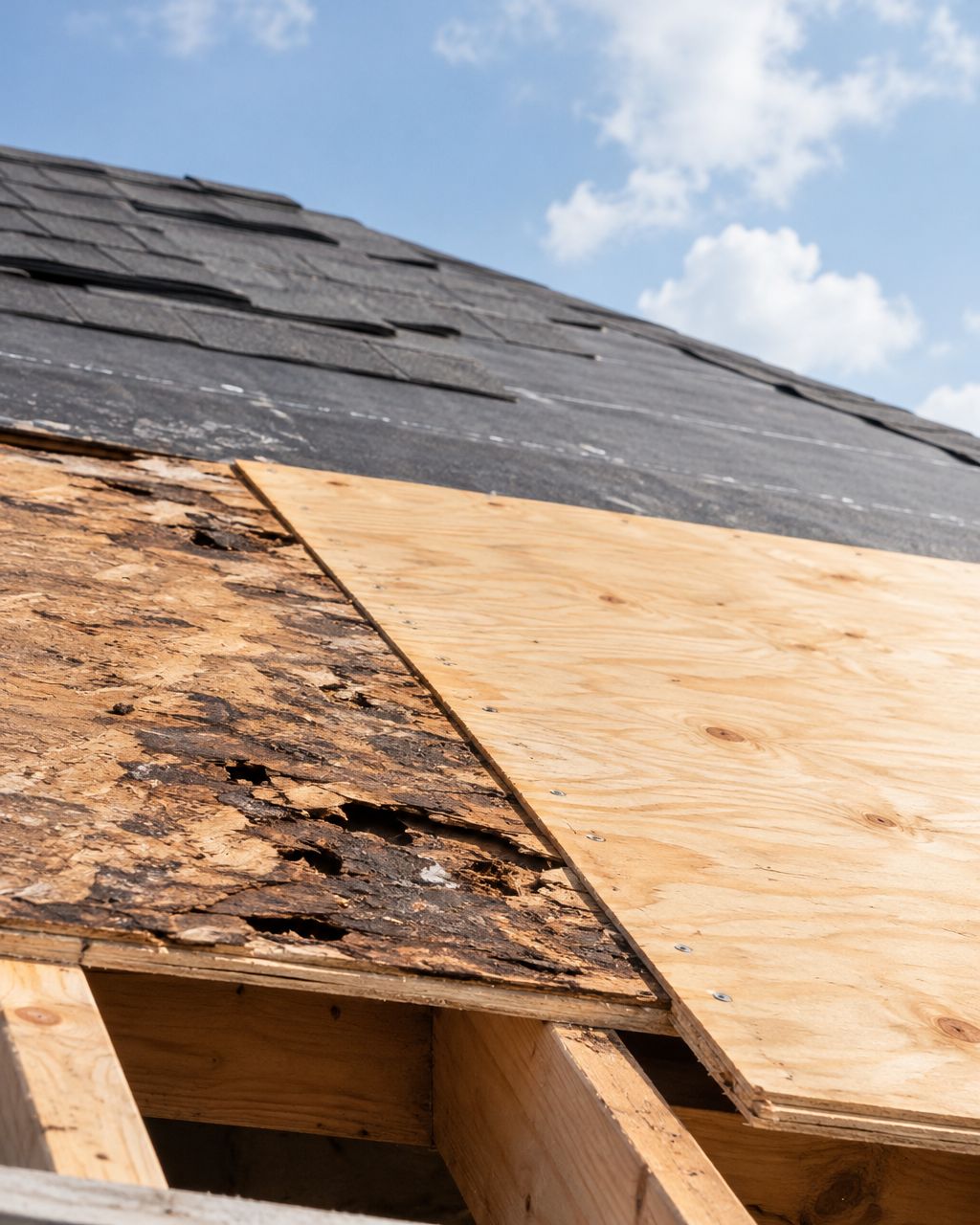
Damaged roof decking changes the repair scope because the roof covering needs a sound supporting surface. The contractor should explain what was found, where it is, and what work is proposed before you approve a change.
A decking finding does not, by itself, answer whether you must leave. Ask whether the affected area changes indoor safety, access, or the work sequence. Do not enter the attic or inspect an exposed area without the contractor’s direction.
Review what happens when roof decking is rotten before discussing how hidden damage will be documented and approved.
For a 2026 estimate, request a written explanation of how unexpected findings are handled. Photos and a location-specific description give you a clearer basis for a decision than a vague statement that the roof needs more work.
Does storm damage change whether you should stay?
Storm damage requires its own assessment because the house’s condition matters before replacement begins. An actively leaking roof, an opening, or visible structural damage is different from an aging roof scheduled for planned replacement.
Do not use the fact that another homeowner stayed during installation as reassurance about a storm-damaged house. Ask the contractor to address occupancy directly, and keep away from visibly damaged areas while you seek appropriate help.
Insurance is a separate decision. Storm damage does not guarantee coverage or a free roof. Your insurer determines coverage under your policy; your contractor explains the observed condition and proposed roofing work.
For an aging roof, focus on the condition supporting replacement and the scope you are buying. For a storm-related project, also keep the inspection findings, insurer’s documents, and agreed work scope organized so that different decisions do not get confused.
Can you work from home while the roof is replaced?
You can work from home if your tasks tolerate overhead construction noise and interruptions. For calls, recordings, concentration-heavy work, or daytime sleep, arrange a quieter location rather than expecting a room inside the house to stay quiet.
Ask about the work sequence before blocking your calendar. A contractor can explain the planned activities, but that explanation is not a guarantee of silence at a particular time.
If you leave with a laptop, stay reachable for property questions. Agree on a contact method that does not depend on you noticing a knock at the door.
Can children and pets stay inside during roof replacement?
Children and pets can remain inside only when you can keep them secure, comfortable, and away from the work area. If noise causes distress or keeping doors controlled is unrealistic, arrange care elsewhere during the disruptive work.
Do not treat an unused part of the yard as automatically safe. Ask which outdoor areas are restricted and when the contractor considers them ready for normal use.
A pet that normally uses a dog door needs a different arrangement while exterior work is active. Discuss necessary outdoor breaks before work begins so you are not improvising a route around debris.
Choose a roofing conversation, not a sales deadline
Thoughtfulroofer serves Huntsville homeowners who need residential roof replacement, repair, metal roofing, or gutter services. Ask for clear findings and sensible options, whether you are planning around an aging roof or sorting out storm damage.
For your 2026 project, the estimate conversation should cover more than the roof covering. Ask about occupancy, property access, unexpected findings, and how you will approve changes. Those answers help you compare the actual work rather than a vague promise.
Discuss your roof replacement plans
Ask about roof condition, replacement options, and staying home during work.
FAQ
Do I have to leave my house during roof replacement in Huntsville?
You do not automatically have to leave during roof replacement in Huntsville. Stay only after your contractor confirms that occupancy and access are safe, and arrange somewhere else if your household cannot tolerate the disruption.
Will roof replacement be noisy inside my house?
Roof replacement creates overhead construction noise and vibration inside the house. Moving to another room does not guarantee quiet, so plan another location for important calls or daytime sleep.
Can I use my driveway while the roof is being replaced?
Driveway use depends on the contractor’s material staging, equipment, and debris-handling plan. Agree on parking and a safe walking route before work begins rather than assuming access will remain unchanged.
Should I leave my pets at home during roofing work?
Leave pets at home only if you can keep them secure indoors and they tolerate the noise. Arrange care elsewhere if construction causes distress or safe outdoor breaks are difficult to manage.
Does storm damage mean insurance will cover my replacement?
Storm damage does not guarantee insurance coverage for roof replacement. Your insurer determines coverage under your policy, while the contractor explains the roof’s condition and proposed work.
What should I ask Thoughtfulroofer before roof replacement?
Ask Thoughtfulroofer whether you can remain home, which entrance to use, and how unexpected roof damage will be explained. Also confirm how you will receive updates and approve changes to the work scope.
One last thing
Before anyone starts, ask: What would make you tell me to leave the house today? That question separates a general reassurance from a practical safety plan.
You do not need to supervise the roof from the yard. You need a safe place to be, a clear route out, and someone who explains what is happening.