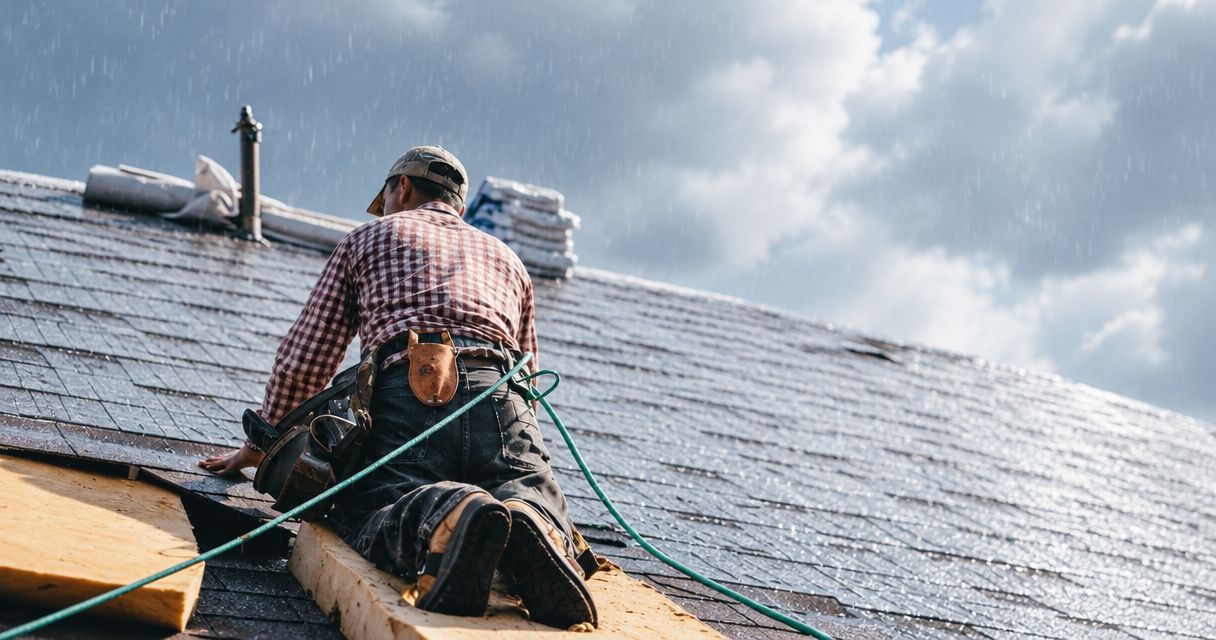
If rain interrupts your roof replacement in Huntsville, the crew should stop work that exposes the house, secure temporary protection over unfinished areas, and resume installation only when conditions meet the roofing material’s requirements. A tarp or exposed underlayment is not the same as a finished roof, so ask what protection is in place and who to contact if water enters. Before work begins, get a clear rain plan covering exposed decking, overnight protection, and checks before installation restarts.
- For roof replacement huntsville al, ask for a rain plan before tear-off begins.
- Wet decking needs assessment before roof replacement continues; temporary protection does not replace a finished roof.
- Thoughtfulroofer serves Huntsville homeowners considering roof replacement, repair, metal roofing, and gutters.
- Storm damage and aging roofs are different situations; neither a rain delay nor storm damage guarantees insurance coverage.
Roof replacement in Huntsville: what if rain interrupts the work?
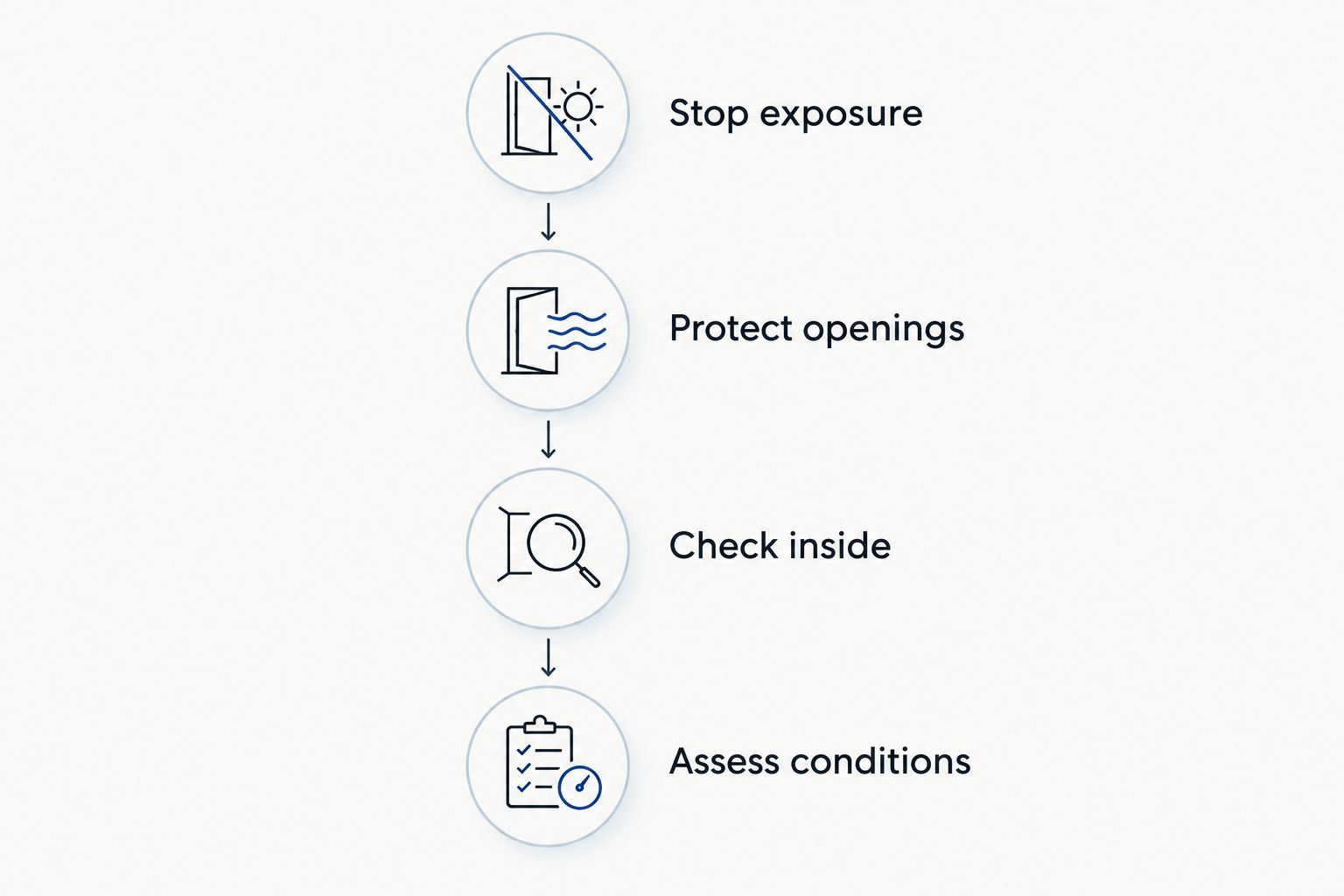
The response should follow a clear sequence: stop exposing the house, protect unfinished sections, check for water entry, and inspect conditions before restarting. When discussing a 2026 replacement with Thoughtfulroofer, ask the contractor to explain that sequence for your house rather than accepting a general promise to watch the weather.
- Stop exposure. Pause tear-off and installation that cannot proceed safely or within the material manufacturer’s requirements.
- Protect openings. Secure suitable temporary protection over exposed roof areas and vulnerable transitions.
- Check inside. Look for water entry from safe indoor locations and report anything new.
- Assess conditions. Inspect the roof deck and other affected materials before covering them or restarting installation.
A delay alone does not tell you whether the roof has a problem. What matters is what was exposed, how it was protected, whether water entered, and what the inspection finds afterward.
Why this matters
Roof replacement temporarily changes how your house sheds water. Removing the existing covering exposes parts of the roof assembly, and unfinished edges, valleys, and penetrations need particular attention during an interruption.
Your decision is not simply whether the forecast looks favorable. You need to understand how the contractor limits exposure and responds when conditions change. A clear explanation lets you compare replacement proposals on something more useful than a promised completion date.
For homeowners in Huntsville, Madison, and Owens Cross Roads, the practical question is the same: what protects your house between tear-off and a completed roof? Ask it before signing, not after the crew has opened the roof.
What changes depending on when rain starts?
Rain before tear-off is different from rain after the deck is exposed. Use this comparison when reviewing your 2026 work plan; each response has a benefit and a limitation.
| Situation | Best response | Benefit | Limitation to discuss |
|---|---|---|---|
| Rain before tear-off | Reassess whether to start | Avoids deliberately opening the roof in unsuitable conditions | Your installation date can change |
| Rain with decking exposed | Stop exposure and secure temporary protection | Addresses the unfinished area | Protection needs secure attachment and inspection |
| Rain over installed underlayment | Check the specific product and installation conditions | Uses the protection that the installed layer provides | Underlayment is not a completed roof |
| Rain after part of the roof is finished | Inspect unfinished transitions and remaining exposure | Directs attention to incomplete details | Finished sections do not establish that every junction is complete |
Ask the contractor to identify which condition applies to your home. A statement that the roof is covered is less useful than an explanation of what covers it and where unfinished areas remain.
Rain before tear-off
Best for avoiding unnecessary exposure: reassess the start. If conditions do not support safe work or proper installation, postponing tear-off keeps the existing roof in place.
The drawback is scheduling disruption. Ask who will confirm the revised start and whether material delivery or access arrangements also need to change. An existing leak still needs its own protection plan while you wait.
Rain after tear-off
Best for protecting an open roof: secure the exposed areas first. Ask which sections are open and how the protection directs water away from openings rather than into them.
Temporary protection is an interim measure, not proof that the roof can be left unattended indefinitely. Ask who will check it after changing weather and what you should do if a ceiling stain appears.
Rain after underlayment installation
Best for deciding whether work can continue: check the actual product requirements. Underlayment products have different instructions concerning exposure, attachment, and installation conditions.
Do not treat the presence of underlayment as a blanket assurance. Its condition, seams, fasteners, and unfinished details still matter, and the next roofing layer must be installed according to its own requirements.
Why the response to rain varies
There is no useful universal rain-delay schedule for every roof. These factors determine what needs attention:
- Work stage: An intact roof and an exposed deck present different protection needs.
- Exposed area: The contractor needs to account for every unfinished section, not just the most visible one.
- Roof details: Valleys, walls, vents, chimneys, and other transitions require attention wherever they are present.
- Material instructions: Shingles, metal roofing components, and underlayments have product-specific installation requirements.
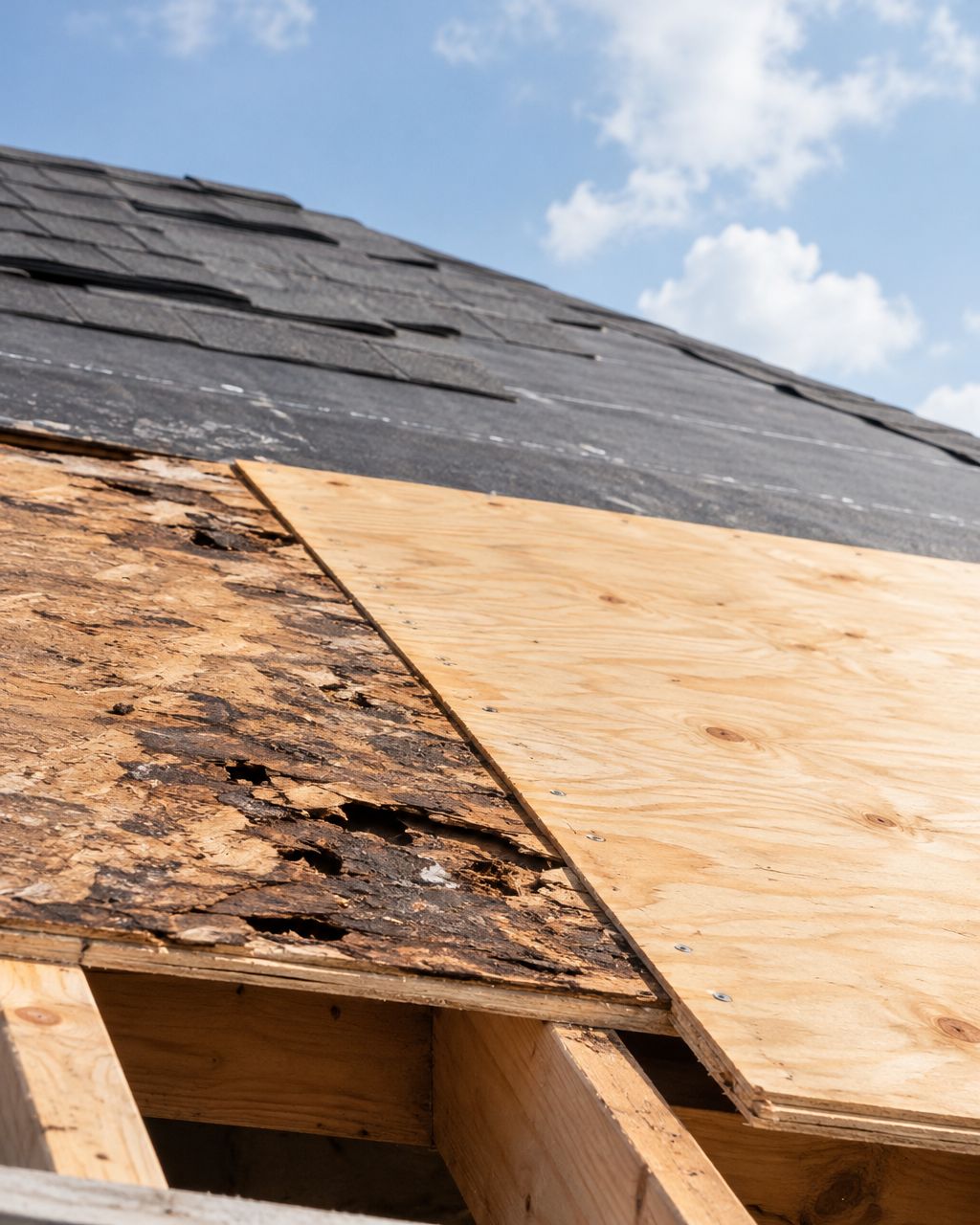
- Deck condition: Wetness, softness, or deterioration needs assessment before the surface is covered.
- Safe access: Rain and wind affect whether workers can safely install or inspect protection.
Use these factors to ask for a house-specific explanation. A steep roof with several transitions does not call for the same discussion as a simpler roof, even when both projects appear on the same weather forecast.
What should you ask before roof replacement starts?
For a 2026 roof replacement estimate, separate the installation scope from the weather-response plan. Both belong in your buying decision, even if they appear in different parts of the paperwork.
Ask these 3 questions before authorizing tear-off:
- How will you limit exposure? Ask whether the crew will open sections in stages and how it decides what can be protected before stopping.
- What happens if rain arrives early? Ask what temporary protection is planned, who directs the response, and how you receive an update.
- What must be checked before restarting? Ask how the contractor assesses the deck, affected materials, and unfinished details.
Then confirm who handles homeowner concerns during an interruption. Keep that contact information somewhere you can reach without searching through a long message thread.
Thoughtfulroofer is a residential roofing service for homeowners in Huntsville, Madison, and Owens Cross Roads. Its service scope includes roof replacement, repair, metal roofing, and gutters. For any estimate, confirm the rain-response arrangements for your particular project rather than assuming the service list answers those questions.
Discuss your roof replacement plan
Ask about roof condition, replacement scope, and protection if rain interrupts the work.
What should you do if water appears inside?
Report new water entry promptly, but do not climb onto the roof or attempt to adjust temporary protection yourself. Stay away from sagging ceiling areas and water near electrical fixtures or equipment. Seek appropriate emergency help if there is an immediate safety concern.
From a safe location, document what you see. Useful records include the room, the time you noticed the problem, photographs of visible staining or dripping, and any message you send to the contractor.
Move belongings only where doing so is safe. Do not enter an attic during unsafe conditions just to collect evidence, and do not disturb electrical equipment affected by water.
Ask the contractor to explain the source investigation, the immediate protection, and the proposed repair. A ceiling stain identifies a symptom; it does not, by itself, establish the entry point or who is responsible.
Can roof replacement continue after the rain stops?
Rain stopping is not, by itself, clearance to resume installation. The roof needs safe working conditions, and the substrate and materials need to satisfy the relevant installation requirements.
Ask what was checked and what remains unresolved. Visible surface dryness does not answer every question about affected decking, underlayment, insulation, or interior materials where water entry occurred.
If the contractor identifies soft or deteriorated decking, request an explanation of the affected area and the proposed work before it is covered. Ask how changes to the original scope will be documented and approved. Do not accept a new layer as a substitute for explaining the condition underneath it.
Does a rain delay mean the whole roof needs replacing again?
A rain delay alone does not establish that completed roofing needs removal. The decision depends on the affected materials, their condition, and whether installation meets the applicable requirements.
Ask for findings tied to specific areas rather than an all-or-nothing conclusion. If corrective work is recommended, the explanation should connect the observed condition to the proposed correction.
The same discipline applies when no corrective work is proposed. Ask why the affected area is suitable to cover or leave in place, especially if you observed water entry during the interruption.
How do aging roofs and storm claims change the discussion?
Keep these 2 situations separate in your 2026 replacement decision. They can lead to similar construction work, but they start with different evidence and paperwork.
Replacing an aging roof
For an aging roof, ask the contractor to distinguish general wear from localized defects. The replacement discussion should explain why a full replacement is recommended and whether repair remains a sensible option for the observed condition.
Rain planning still matters even when there is no insurance claim. Confirm how existing leaks will be handled before the start and how any newly discovered deck damage changes the scope.
Replacing a roof after storm damage
For storm-related work, keep inspection findings, photographs, the replacement proposal, and claim correspondence organized. Ask the contractor to distinguish pre-existing conditions, reported storm damage, and anything discovered during tear-off.
Storm damage does not guarantee insurance coverage or a free roof. Coverage depends on your policy and the insurer’s assessment. A leak during installation also needs its own factual investigation; do not assume an existing claim automatically addresses it.
FAQ
Is it normal to postpone a roof replacement because of rain?
Postponing roof replacement is appropriate when conditions do not support safe work or installation requirements. Ask for the revised plan and how any existing leak will be protected while you wait.
Will a tarp keep my house completely dry during roof replacement?
A tarp is temporary protection, not a guarantee against water entry. Its suitability depends on how it is secured, the exposed area, and conditions at the roof.
Can roofers install shingles on wet decking?
Shingle installation should proceed only when the deck and installation conditions meet the applicable manufacturer requirements. Ask the contractor to assess wet decking before covering it.
How long does a roof need to dry after rain?
There is no single drying period that applies to every roof. The material condition, weather, and product requirements determine when installation can restart.
Who pays if rain gets inside during roof replacement?
Responsibility for water damage requires reviewing the cause, contract terms, and applicable coverage. Document the damage and notify the contractor and relevant insurer without assuming the outcome.
What should I ask Thoughtfulroofer about a 2026 roof replacement?
Ask Thoughtfulroofer to explain the replacement scope, temporary protection plan, and checks before work restarts after rain. Confirm who will update you and how changes to the work will be approved.
One last thing
Ask to see what is being protected, not just what has been installed. A photograph of finished shingles does not show every unfinished transition or exposed section elsewhere on the roof.
For your 2026 project, request a plain-language status update whenever weather interrupts work: what is finished, what remains open, and what must happen next. That gives you a useful record without requiring you to climb a ladder or interpret roofing jargon.