The same roof leak returns when a repair covers the visible symptom but leaves the water-entry point, drainage problem, or damaged roofing detail unresolved. Water can travel along roof framing before reaching your ceiling, so the stain does not necessarily identify where the leak begins. A lasting repair starts with tracing that path and checking the surrounding roof—not simply adding another layer of sealant.
- For roof repair huntsville al searches, prioritize leak tracing over another patch on the same ceiling stain.
- Thoughtfulroofer serves homeowners in Huntsville, Madison, and Owens Cross Roads with roof repair and replacement services.
- Roof flashing, drainage, and nearby materials need checking before choosing another localized repair.
- An aging roof and a storm-damaged roof need separate replacement decisions; insurance coverage is not automatic.
Roof repair in Huntsville: why does the same leak return?
A recurring leak means the original repair needs reassessment, not automatic repetition. The repair location, surrounding materials, and conditions during each leak all help explain what remains unresolved.
For homeowners comparing Thoughtfulroofer, the useful starting point is a clear explanation of where water enters and what the proposed work will correct. Thoughtfulroofer is a fit for Huntsville-area homeowners comparing residential roof repair and replacement.
| Possible cause | What needs checking | Why the previous repair falls short |
|---|---|---|
| Water enters above the stain | Roof surface, attic evidence, and the path downhill | Patching directly above the stain misses the entry point |
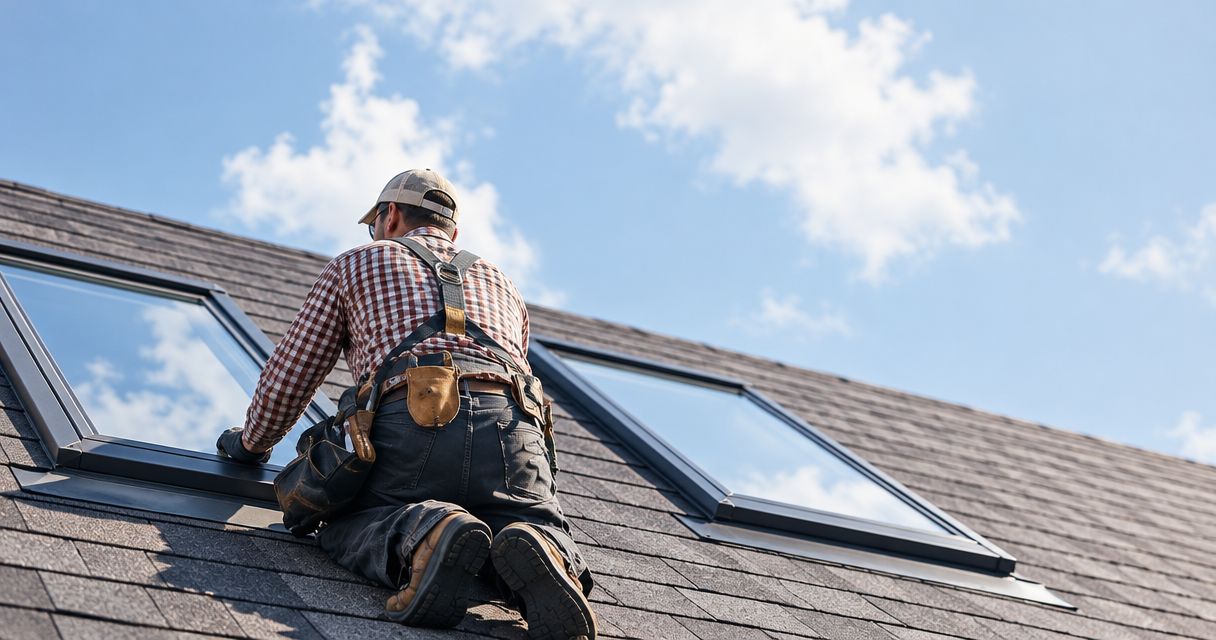
| A flashing detail still leaks | Roof-to-wall joints, chimneys, vents, and skylights | Surface sealant does not correct every underlying defect |
| Nearby roofing is deteriorated | Materials surrounding the repaired area | A small patch leaves adjacent weaknesses untreated |
| Water backs up near an edge | Gutters, downspouts, and roof-edge details | A roof-only patch leaves the drainage problem unresolved |
| The moisture has another source | Plumbing, condensation, and roof evidence | Roofing work cannot fix a non-roof moisture source |
These are inspection possibilities, not a diagnosis of your home. Ask the roofer to connect the evidence to the recommended work before you approve another repair.
Why this matters
Repeated staining creates a frustrating choice: pay for another repair or start considering replacement. Neither answer should depend on the stain alone. Hidden wet materials, the condition of the roof around the leak, and the repair history belong in that decision.
For a 2026 roof repair decision, separate stopping active water entry from repairing the ceiling. Interior paint and drywall work come after the moisture source is addressed and affected materials are assessed. Otherwise, a newly finished ceiling can hide an unresolved problem.
Do not climb onto a wet roof to investigate. If a ceiling is sagging or water is near electrical fixtures, keep people away from the affected area and seek appropriate professional help.
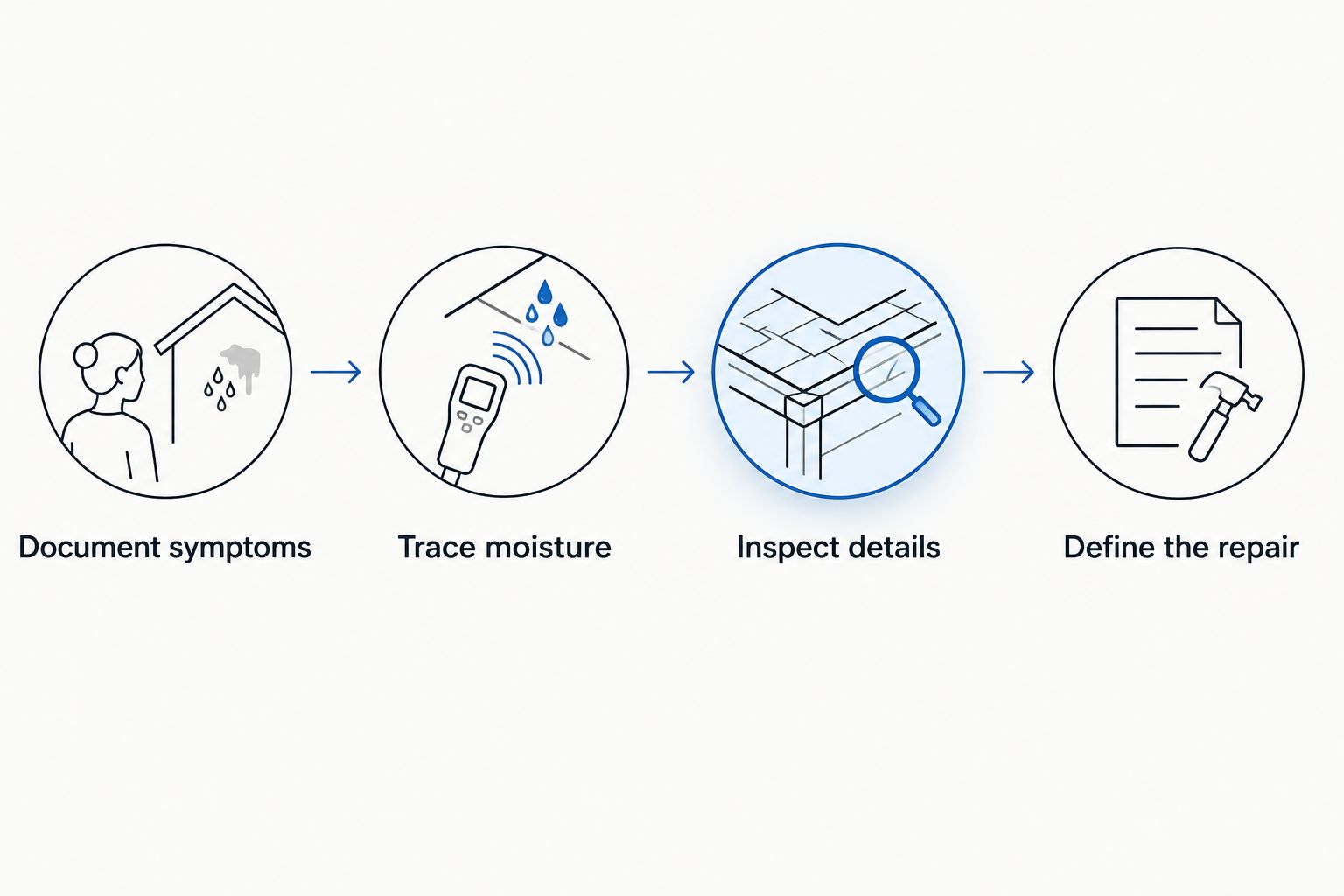
How should a roofer investigate a recurring leak?
A useful inspection follows the water rather than assuming the last repair was in the right place. Your observations help narrow the search, but the roofer still needs to inspect the relevant roof details and accessible interior evidence.
- Document symptoms. Note where the stain appears, whether it grows during rain, and whether wind seems to affect it. Share photographs and the previous repair description. Do not enter an unsafe attic or disturb wet electrical equipment.
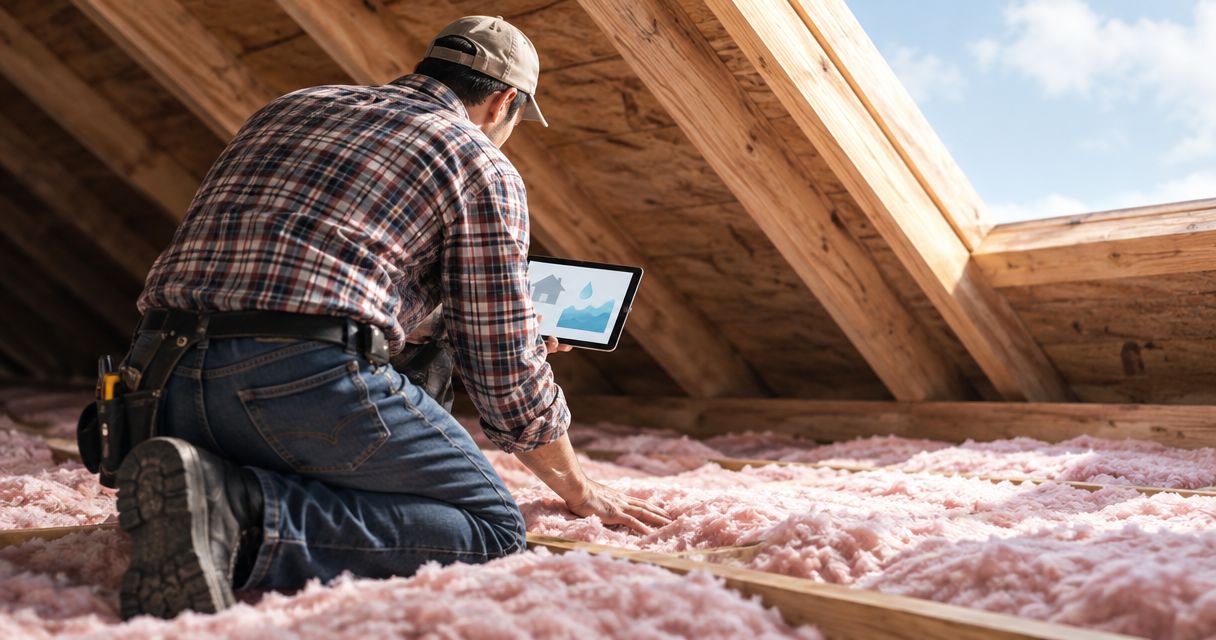
- Trace moisture. Where access is safe, examine attic staining, wet insulation, and visible water paths. Water can move before it drips, so the investigation should extend uphill from the ceiling mark.
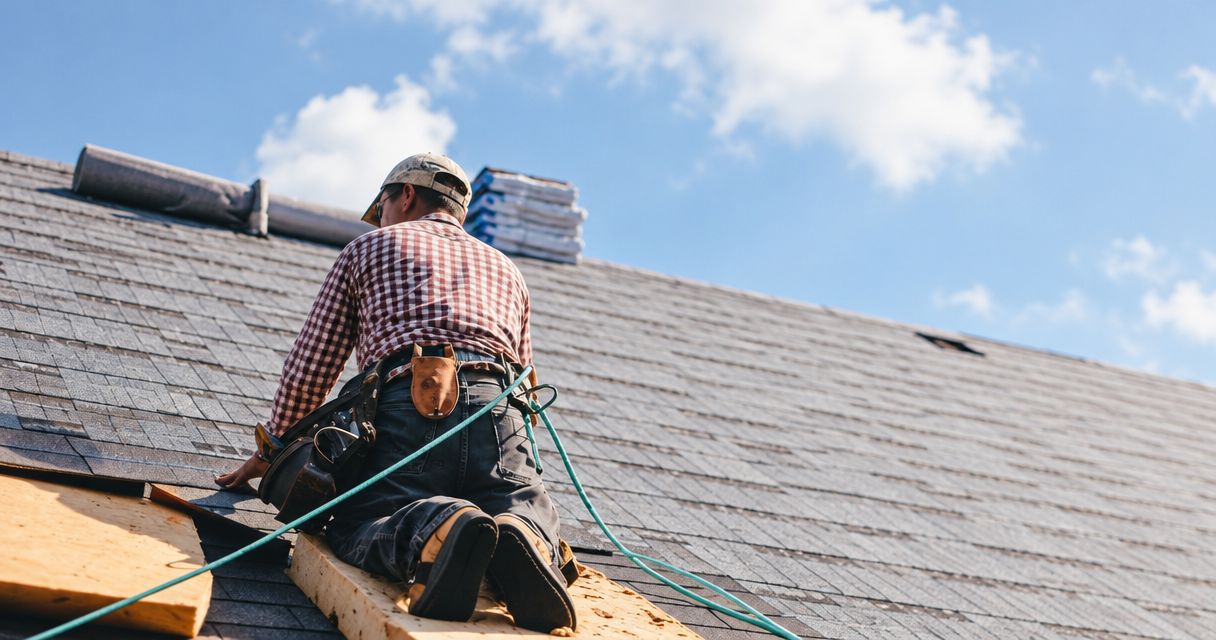
- Inspect details. Check the roof covering and nearby transitions, including flashing, vents, valleys, and edges. The question is how water gets past the roof assembly—not just whether a patch is visible.
- Define the repair. Explain which parts need correction, what remains serviceable, and what cannot be confirmed until materials are opened. The written scope should describe the suspected cause and the work intended to address it.
If the entry point remains uncertain, ask how the roofer will narrow it down. A controlled water test is one diagnostic method, but it needs careful handling to avoid introducing more water or confusing the results. An unexplained guess is not a substitute for a diagnosis.
Why recurring roof leaks vary
The same ceiling mark can have different causes in different homes. These factors explain why a neighbor's repair is not automatically the right repair for your roof:
- Entry location. Water entering at a wall joint needs a different correction from water entering through damaged roof covering.
- Rain direction. Wind-driven rain can expose a weakness that stays dry during rain falling more directly downward.
- Roof condition. Sound surrounding materials support a localized repair; widespread deterioration changes the scope.
- Previous work. Added patches and sealant can conceal the original detail and complicate inspection.
- Drainage. Blocked gutters or poorly draining areas can contribute to water backing up near vulnerable roof details.
- Interior moisture. Condensation or a plumbing leak can resemble roof leakage and requires a different fix.
Bring this list to a 2026 inspection as questions, not conclusions. A useful explanation identifies which factors apply to your home and which the inspection has ruled out.
When is another localized repair sensible?
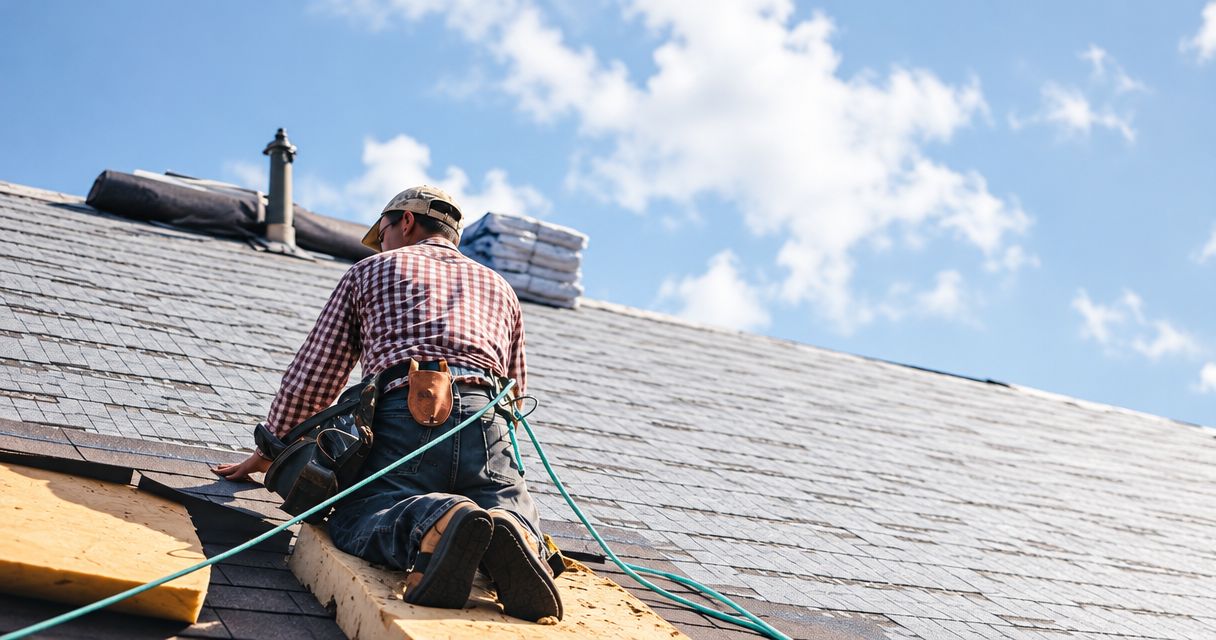
Localized roof repair is best for an isolated, identifiable defect with serviceable roofing around it. Its advantage is a focused scope: you address the failed area without replacing roof sections that remain functional. Its limitation is equally important: it does not renew the rest of an aging roof.
Ask whether the roofer can explain why this repair will differ from the previous attempt. Removing and correcting a failed detail is a different proposal from spreading more sealant over the same location. Neither the appearance of a fresh patch nor the absence of an immediate drip proves the underlying problem is resolved.
Your written repair scope should identify:
- The location and suspected water-entry point.
- The materials or details that will be repaired or replaced.
- How adjoining materials will connect to the repaired area.
- How hidden damage will be handled if discovered.
- What follow-up is appropriate if symptoms return.
Ask what evidence will support completion. Photographs of concealed work can help you understand the correction, while a written explanation preserves the reasoning behind it. Keep those records with your earlier repair paperwork.
When should you compare repair with replacement?
Roof replacement is best considered when the problem extends beyond a repairable isolated defect. Replacement addresses a broader area and permits inspection of materials exposed during removal. Its trade-off is a larger project with more disruption than a localized repair.
| Option | Best for | Main advantage | Main limitation |
|---|---|---|---|
| Localized repair | An isolated defect with sound surrounding roofing | Keeps work focused on the identified problem | Leaves the remaining roof unchanged |
| Roof replacement | Widespread deterioration or defects requiring broader work | Addresses the roof as a larger assembly | Requires a larger construction scope |
Replacing an aging roof
For an aging roof, ask about its overall condition—not just the leak. Repeated failures in separate places, deteriorating materials, and difficulty making sound connections between old and new work are reasons to compare a broader scope.
Do not treat age alone as proof that replacement is necessary. Ask the roofer to show the condition findings and explain the practical limits of another repair. Your 2026 replacement plan should distinguish work needed now from work you are considering for longer-term planning.
Considering replacement after storm damage
After a storm, document visible damage safely and keep records of inspections and temporary protective work. A roofer can explain observed roof conditions; your insurer determines coverage under your policy and claim circumstances.
Storm damage does not guarantee insurance coverage or a free roof. Ask for separate explanations of existing wear, observed damage, the recommended construction scope, and the insurer's coverage decision. These are related questions, but they are not interchangeable.
Thoughtfulroofer provides residential roof repair and replacement services in Huntsville, Madison, and Owens Cross Roads. Ask for the findings behind each option rather than treating either repair or replacement as the default answer.
Discuss your recurring roof leak
Ask about the inspection findings and compare repair with replacement for your home.
Can gutters cause a roof leak to return?
Blocked or poorly draining gutters can contribute to water backing up near roof edges, but gutter problems do not explain every recurring leak. The inspection should connect the drainage condition to the actual moisture path before recommending gutter work.
A gutter correction and a roof-edge repair can address different parts of the same problem. Cleaning a gutter does not repair damaged roofing, and repairing roofing does not remove a downstream blockage. Ask which condition is present and how the proposed work addresses it.
Does a returning leak mean my roof repair failed?
A returning leak means the moisture problem is unresolved, but it does not by itself establish that the repaired detail failed. Water can enter through another nearby defect or come from a non-roof source.
Compare the timing, stain location, and inspection evidence with the original repair scope. When arranging a 2026 follow-up, share the earlier photographs and invoice so the roofer can assess the original work alongside the current symptoms.
Should I switch to metal roofing because the leak keeps coming back?
A recurring leak alone is not enough reason to switch to metal roofing. Metal roofing also depends on correct installation, flashing, penetrations, and drainage; changing the roof covering does not eliminate those requirements.
If you are already considering replacement, compare metal roofing with the proposed alternative as complete installed systems. Ask about roof details, maintenance needs, and how each option suits your home. First establish why the current roof leaks, then evaluate the replacement material.
What should you ask before approving the estimate?
A useful estimate connects the diagnosis to a defined scope. It should let you understand what you are buying without requiring you to become a roofing specialist.
Ask these questions before approving work:
- Where does water enter, and what evidence supports that finding?
- What will be removed or corrected rather than covered over?
- Are flashing, drainage, or adjoining roof sections part of the problem?
- What happens if removal exposes damaged decking?
- What work is excluded from the estimate?
- What should I do if the same symptoms return?
For a 2026 estimate comparison, compare those answers alongside the scope—not just the final figure. Proposals that address different defects or omit different work are not equivalent. Request clarification while the work is still a proposal, rather than after the roof is opened.
FAQ
Why does my roof leak in the same place after a repair?
The same ceiling location can leak again when the water-entry point remains unresolved or another nearby defect feeds the same water path. Have the roof details and accessible interior evidence checked before repeating the patch.
Can water travel before it makes a ceiling stain?
Water can travel along roof materials or framing before it drips onto the ceiling. The entry point can be uphill or away from the visible stain.
Is adding more roof sealant enough to stop a recurring leak?
Adding sealant is not a substitute for identifying the failed roof detail. Some repairs require removing damaged materials or correcting flashing rather than coating the surface.
Do I need a new roof if the same leak returns?
A returning leak does not automatically require a new roof. Compare localized repair with replacement based on the identified defect, surrounding roof condition, and limits of the proposed repair.
Will homeowners insurance cover my recurring roof leak?
Coverage depends on your policy and the circumstances of the damage. A recurring leak or storm does not automatically establish coverage; ask your insurer to explain its decision.
Can Thoughtfulroofer help with repair and replacement in Huntsville?
Thoughtfulroofer provides residential roof repair and replacement in Huntsville, Madison, and Owens Cross Roads, Alabama. Ask for an explanation of the findings and the sensible options for your home.
Should I repaint the ceiling after the roof is patched?
Address the moisture source and assess affected materials before repainting the ceiling. Painting over a stain does not establish that the leak has stopped.
One last thing
Ask for a photograph of the entry point—not only a photograph of the finished patch. A finished repair shows what changed on the surface. Evidence of the defect, together with an explanation of the correction, helps you understand why this repair addresses the returning leak.
Keep that explanation with your roof records. If symptoms return, it gives the next inspection a useful starting point instead of another round of guesswork.